Almond Flour Shortbread Cookies

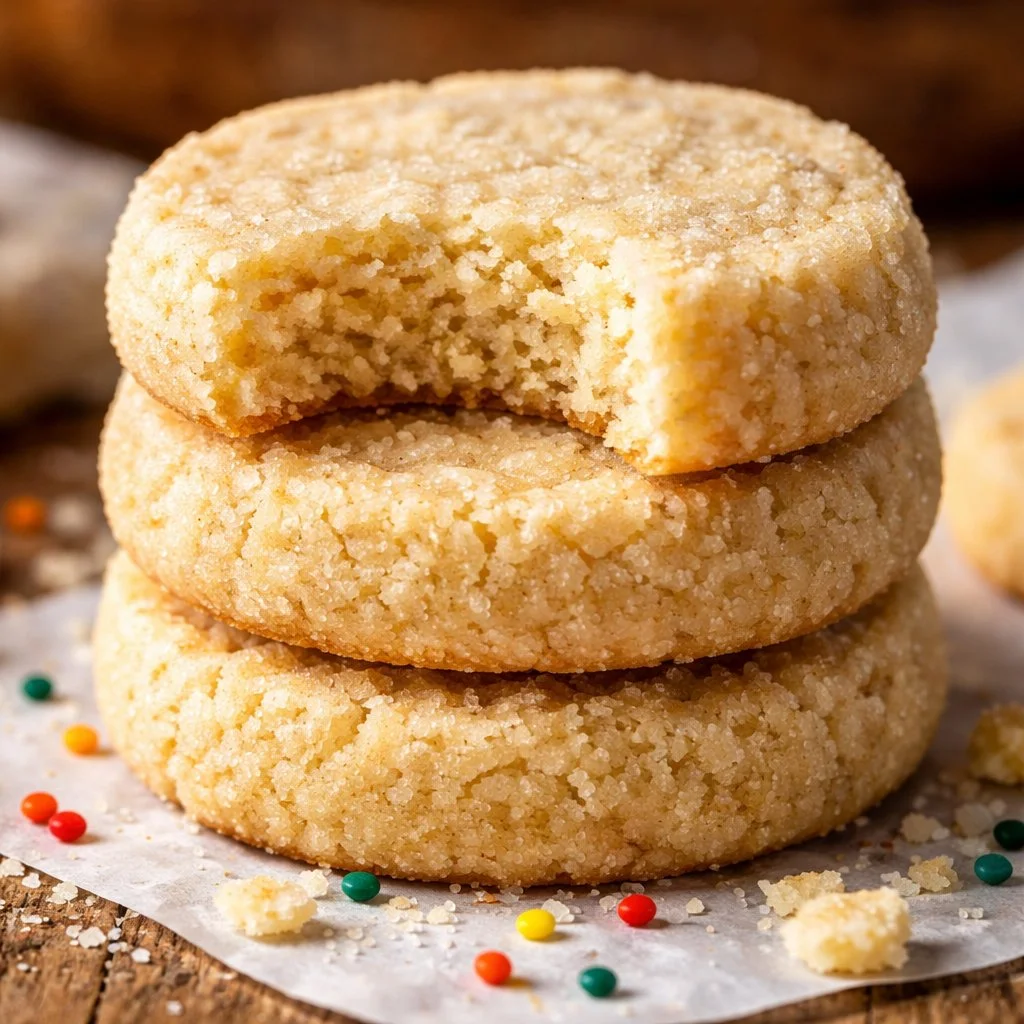
I’ve been making these almond flour shortbread cookies for years — they’re a tiny, buttery bite that comes together in minutes and disappears even faster. They’re perfect when you want a delicate, gluten-free cookie for tea, a holiday tray, or a quick afternoon treat. If you like streamlined recipes, you might also enjoy a buttery 3-ingredient shortbread that uses the same simple logic.
Why you’ll love this dish
These cookies are special because they deliver classic shortbread texture with just three pantry ingredients and naturally gluten-free almond flour. They’re quick to mix, forgiving for beginner bakers, and dress up nicely with a dusting of powdered sugar or a dip in chocolate for gift boxes. Make them when you want a small-batch cookie that’s low-effort but feels special — think last-minute company, cookie swaps, or a calm weekend baking session.
“Light, crumbly, and nutty — the perfect shortbread that melts on the tongue. My kids asked for them every day after school.” — a reader review
Step-by-step overview
Before you start: this recipe is a quick creaming-and-folding method. You soften butter, mix in powdered sugar until smooth, then gently fold in almond flour to a tacky dough. Shape into small rounds, flatten, and bake until the edges just turn light golden. Expect about 18–24 small cookies depending on size; total hands-on time is under 15 minutes, and bake time is 10–12 minutes.
What you’ll need
- 1 cup almond flour (finely ground) — almond flour gives the tender, melt-in-your-mouth texture; finely ground is best.
- 1/4 cup unsalted butter, softened — brings richness and structure. For dairy-free, see substitutions below.
- 1/4 cup powdered sugar — helps with the smooth texture; you can use a fine granulated sugar blended to a powder as a substitute.
Notes and substitutions inline:
- Almond flour vs almond meal: finely ground almond flour yields the most delicate crumb. If you only have almond meal, the cookies will be slightly coarser but still tasty.
- Dairy-free option: swap the butter for 1/4 cup solid coconut oil or a vegan butter stick, but expect a subtle coconut flavor with coconut oil.
- Sweetener swap: for lower sugar, try a powdered erythritol in a 1:1 powdered form, but browning and texture will vary.

Step-by-step instructions
- Preheat the oven to 350°F (175°C). Line a baking sheet with parchment paper.
- In a mixing bowl, add the softened butter and powdered sugar. Use a spatula or a hand mixer on low to combine until smooth and pale — just enough to blend; don’t over-whip.
- Stir in the almond flour. Fold gently until the dough comes together and holds when pressed. If the dough is crumbly, add a tiny pinch of water or a drop of melted butter.
- Roll the dough into small balls (about 1 inch or a level tablespoon). Place them on the prepared sheet about 1–2 inches apart.
- Flatten each ball slightly with your fingers or the tines of a fork to about 1/4 inch thick. A fork pattern adds a classic shortbread look.
- Bake 10–12 minutes, watching closely. Almond flour browns faster than wheat flour; remove when edges are just turning light golden.
- Transfer cookies to a wire rack to cool completely before serving.
Hint: if you’d like perfectly uniform cookies, use a small cookie scoop and gently press each one with a measuring cup rim.
In another simple shortbread method, you can see how shaping and timing change texture in a 3-ingredient sugar cookies recipe — the same principles apply.
Best ways to enjoy it
These cookies are very versatile:
- Serve with tea or coffee for an elegant afternoon snack.
- Arrange on a holiday cookie platter with chocolate-dipped edges and candied almonds.
- Sandwich two cookies with jam, lemon curd, or Nutella for a tiny sandwich cookie.
- Crumble over vanilla ice cream as a nutty crisp topping.
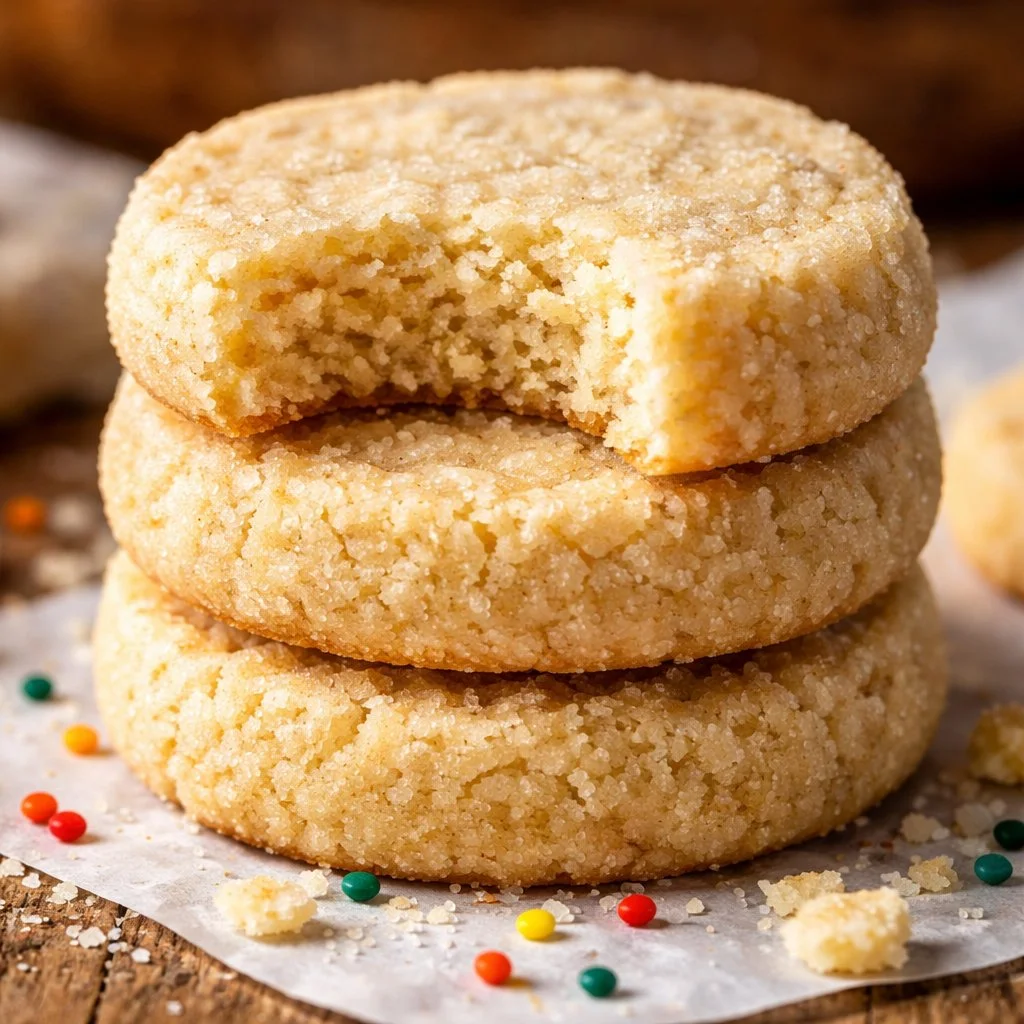
For a simple plate: stack three cookies, dust with powdered sugar, and add a few fresh berries or a sprig of mint for color.
Storage and reheating tips
- At room temperature: store in an airtight container for up to 4 days. Separate layers with parchment to avoid sticking.
- In the refrigerator: keep in an airtight container for up to 10 days; bring to room temperature before serving to restore tenderness.
- Freezing: freeze baked cookies in a single layer on a tray until firm, then transfer to a freezer bag for up to 3 months. Thaw at room temperature. You can also freeze the formed raw dough balls on a tray, then store in a bag; bake from frozen, adding 1–2 minutes to bake time.
- Food safety: these cookies contain butter; if storing longer than a few days at room temperature in warm climates, refrigerate to prevent spoilage.
Pro chef tips
- Don’t overwork the dough: almond flour releases oils, so mix only until combined to keep the crumb delicate.
- Measure almond flour correctly: spoon it into the cup and level — packing yields dense dough.
- Watch the oven: almond flour browns quickly; check at 8–9 minutes if your oven runs hot.
- Even thickness = even bake: press to a uniform 1/4 inch to avoid floppy centers or overly browned edges.
- For perfect fork marks, chill the shaped cookies 10 minutes first so the pattern holds.
For inspiration on crisp edges and technique adjustments, check a creative cookie riff like these brown sugar pop tart cookies.
Creative twists
- Lemon-almond: add 1 tsp lemon zest and a pinch of salt for bright flavor.
- Chocolate-dipped: melt dark chocolate and dip half the cooled cookie, letting excess drip off before setting.
- Spiced version: add 1/4 tsp cinnamon and a pinch of cardamom.
- Jam sandwiches: press a small indentation in the center before baking and fill with 1/4 tsp jam after cooling.
- Pumpkin-almond: fold in 1–2 Tbsp canned pumpkin plus 1/8 tsp pumpkin pie spice and slightly reduce butter — a nuttier, seasonal take (similar flavor profiles appear in this gluten-free pumpkin chocolate chip cookies recipe).
Your questions answered
Q: Are these cookies gluten-free?
A: Yes — with almond flour and no wheat-based ingredients, they are naturally gluten-free. If serving to someone with celiac disease, ensure your almond flour is certified gluten-free.
Q: Can I use almond meal instead of almond flour?
A: You can. Almond meal is coarser and will yield a crumblier texture, but the cookies will still be tasty. For the most delicate shortbread, use finely ground almond flour.
Q: How many cookies does this recipe make?
A: Using level tablespoon-sized balls, expect about 18–24 small cookies. Larger scoops will reduce yield.
Q: Can I bake a single large cookie or bars instead?
A: Yes. Press the dough into a small square pan and bake until the edges are golden; check frequently since baking time will change.
Q: Can I prepare the dough ahead?
A: You can form the balls and refrigerate them for up to 24 hours before baking. For longer storage, freeze shaped dough balls as noted above.
Conclusion
These almond flour shortbread cookies are a quick, elegant treat that fits gluten-free baking without fuss. If you want more almond-shortbread inspiration and variations, see this simple, low-sugar take on Almond Flour Shortbread Cookies (low sugar and really easy). For another tested approach and useful notes on texture and timing, I also recommend this Almond Flour Shortbread Cookies – Kalyn’s Kitchen.
Almond Flour Shortbread Cookies
Ingredients
Method
- Preheat the oven to 350°F (175°C) and line a baking sheet with parchment paper.
- In a mixing bowl, add the softened butter and powdered sugar. Mix until smooth and pale, being careful not to over-whip.
- Gently fold in the almond flour until the dough comes together and holds when pressed. If crumbly, add a tiny pinch of water or a drop of melted butter.
- Roll the dough into small balls, about 1 inch or a level tablespoon each, and place them on the prepared sheet 1–2 inches apart.
- Flatten each ball slightly with your fingers or the tines of a fork to about 1/4 inch thick.
- Bake for 10–12 minutes, watching closely to prevent burning, and remove when the edges just turn light golden.
- Transfer cookies to a wire rack to cool completely before serving.