Chicken Chow Mein

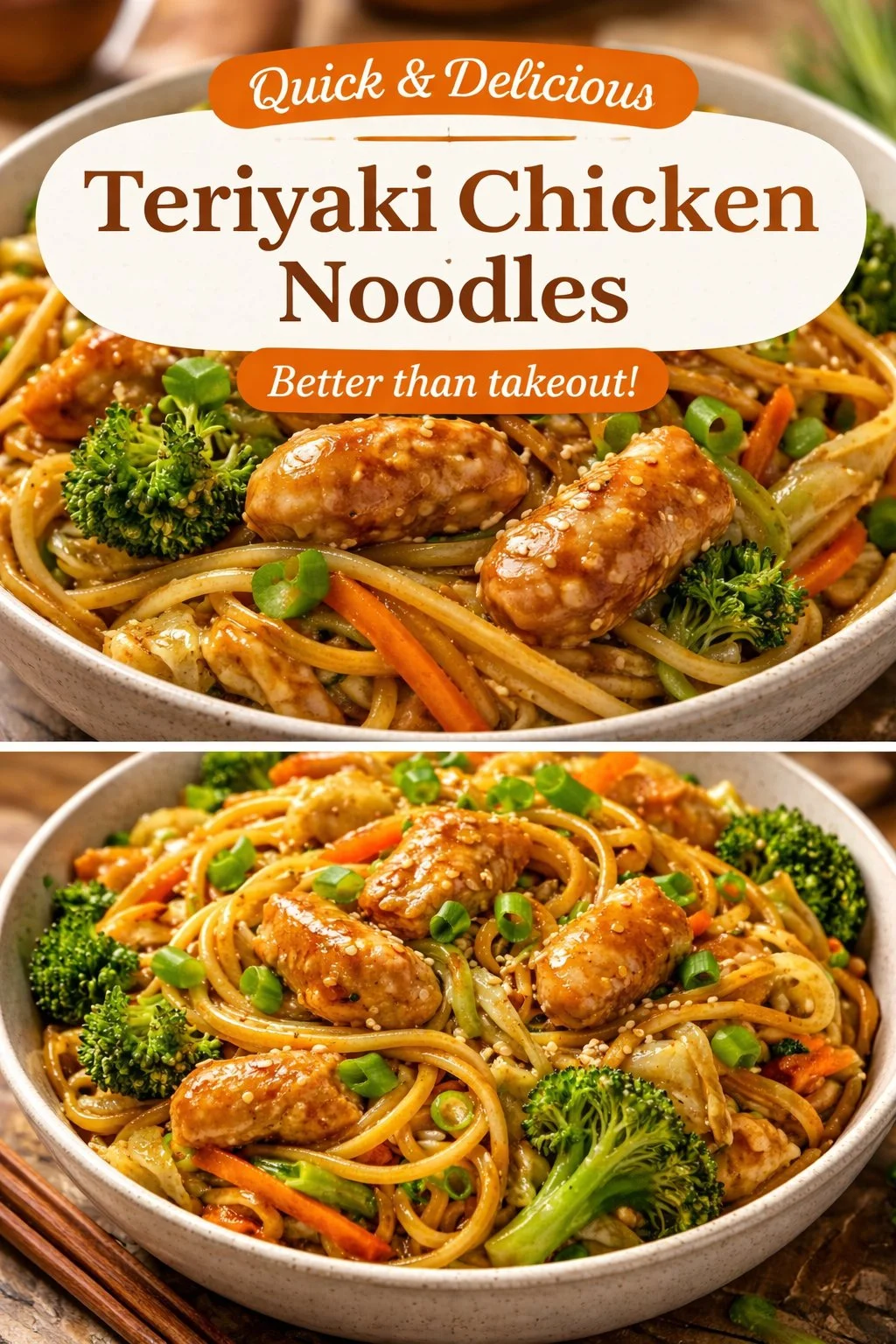
I grew up with takeout boxes of chow mein and finally learned how to make a version at home that’s faster, less greasy, and just as satisfying. This Chicken Chow Mein recipe streaks together tender strips of chicken, crisp cabbage and carrots, and a glossy oyster-soy sauce that clings to every noodle—perfect for a weeknight dinner when you want something comforting and quick.
In the meantime, if you’re juggling other weeknight meals, I often rotate this with a slow-cooker soup—like this creamy crockpot chicken corn chowder—for nights I want something hands-off.
Why you’ll love this dish
This version of chicken chow mein hits the sweet spots: it’s quick (about 25–30 minutes from start to finish), budget-friendly (simple pantry sauces), and flexible—swap proteins or vegetables in a pinch. The cornstarch in the sauce gives that takeout-worthy sheen and slight clinginess without being gummy, while rinsing the noodles after boiling keeps them from sticking during the stir-fry.
"A weeknight staple: crisp veggies, tender chicken, and a sauce that tastes like you ordered in—only faster."
If you like crispy edges on your chicken, pair this with a crunchy side like these air fryer ranch-crusted chicken bites for a playful contrast.
Step-by-step overview
- Make and whisk the sauce so it’s lump-free.
- Cook noodles, drain, and rinse to stop cooking.
- Stir-fry seasoned chicken until golden; remove.
- Quickly stir-fry carrots, cabbage, and garlic.
- Return chicken and noodles, pour sauce, toss until thickened.
- Garnish and serve hot.
This short roadmap helps you set mise en place and keeps the wok moving—stir-fry is fast, so have everything prepped before you heat the pan. For a Caribbean-flavored week, you can adapt the protein marinades similar to those in this Jamaican curry chicken recipe.
Gather these items
- 1 lb boneless, skinless chicken breast, cut into bite-sized strips
- 3 tbsp neutral oil (vegetable, canola, or light olive oil)
- 12 oz chow mein noodles (uncooked) — any thin egg noodles will do
- 2 cups cabbage, shredded (green or napa)
- 1 large carrot, julienned or thinly sliced
- ½ batch green onions, chopped (about 2–3 stalks)
- 2 garlic cloves, minced
- 6 tbsp oyster sauce (for savory depth; use vegetarian oyster sauce for meatless version)
- 3 tbsp low-sodium soy sauce
- 3 tbsp light sesame oil (adds toasted flavor)
- ½ cup chicken broth (or water + ½ tsp bouillon)
- 1 tbsp cornstarch (thickener)
- 1 tbsp granulated sugar (balances oyster sauce saltiness)
Notes: If you don’t have chow mein noodles, thin spaghetti or lo mein noodles work. For gluten-free, swap soy sauce for tamari and use gluten-free oyster sauce alternative.
Directions to follow
- In a small bowl whisk together 6 tbsp oyster sauce, 1 tbsp sugar, 3 tbsp light sesame oil, 3 tbsp low-sodium soy sauce, ½ cup chicken broth, and 1 tbsp cornstarch until smooth. Set aside.
- Boil the chow mein noodles according to package directions. Drain and rinse under cold water to stop cooking and reduce stickiness. Set aside.
- Heat 2 tbsp oil in a large wok or skillet over medium-high heat. Season chicken strips lightly with salt and pepper. Add to the hot pan and stir-fry until golden and cooked through, about 5–7 minutes. Remove chicken to a plate.
- Add the remaining tablespoon of oil to the pan. Stir-fry the julienned carrot, shredded cabbage, and minced garlic until vegetables are just tender, about 3–4 minutes; don’t overcook—the veg should keep some bite.
- Return the chicken and drained noodles to the wok. Pour the prepared sauce over everything. Toss quickly to combine and distribute sauce evenly.
- Continue stirring until the sauce thickens and becomes glossy, about 1–2 minutes. Taste and adjust with a pinch of salt, a splash of soy, or a drizzle of sesame oil if needed.
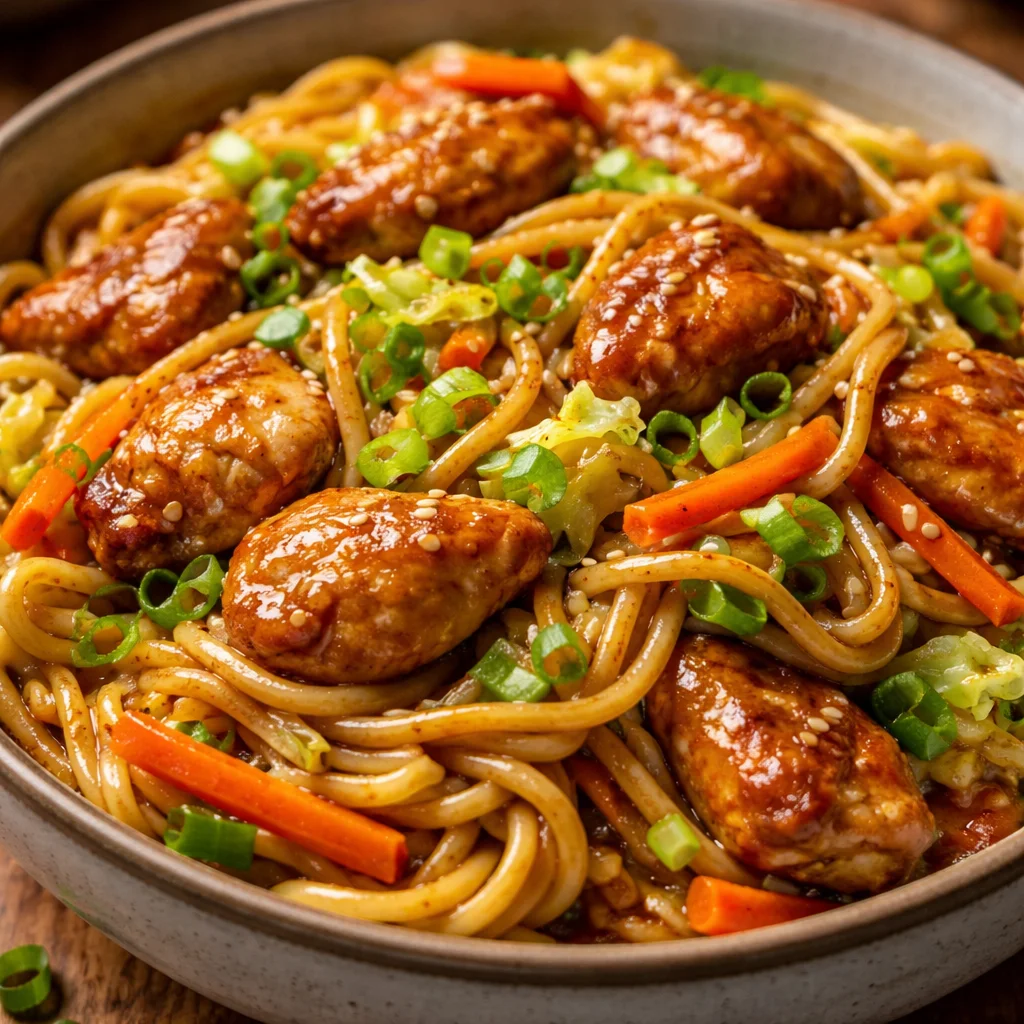
- Turn off the heat, garnish with chopped green onions, and serve immediately while hot.
Short, clear actions and high heat keep this stir-fry vibrant. If your sauce thickens too fast, add a tablespoon of water to loosen it and continue tossing.
Best ways to enjoy it
Serve chicken chow mein straight from the wok on wide shallow bowls so noodles don’t clump. Pair with simple sides: cucumber salad, steamed edamame, or lightly pickled carrots for brightness. For a fuller meal, serve alongside steamed rice and a small plate of kimchi or this lemony avgolemono-style chicken soup for contrasting textures and flavors.
How to store & freeze
Cool leftovers within two hours, then store in an airtight container in the refrigerator for up to 3–4 days. Reheat gently in a skillet over medium heat with a splash of water or broth to revive the sauce and soften noodles. You can freeze portions (no more than 2–3 months); thaw overnight in the fridge before reheating. For best texture, slightly undercook noodles if you plan to reheat from frozen.
Helpful cooking tips
- Prep everything before heating the wok—stir-frying moves fast.
- Rinse cooked noodles in cold water to stop starch, then toss with a teaspoon of oil to prevent sticking.
- Use high, dry heat and a roomy pan to get quick sear on chicken without steaming.
- If you want more sauce, double the sauce ingredients and whisk in an extra 1–2 tbsp water.
- Taste the sauce before adding: oyster sauces vary widely in saltiness—adjust soy or sugar accordingly.
Creative twists
- Vegetarian: swap chicken for extra firm tofu (pressed and pan-fried) and use vegetarian oyster sauce.
- Beef or shrimp: use thinly sliced flank steak or raw shrimp; cook briefly until just done.
- Spicy: add 1–2 tsp chili garlic sauce or a drizzle of sriracha to the sauce.
- Crunch factor: top with toasted sesame seeds or crushed roasted peanuts.
- Low-sodium: reduce soy by half and boost flavor with rice vinegar and extra garlic.
Helpful answers
Q: How long does this take to make?
A: Active time is about 20–30 minutes. Most time is hands-on stir-frying; prep (slicing chicken and veg) may add 10 minutes.
Q: Can I prep parts ahead?
A: Yes—whisk the sauce and slice the chicken and veggies up to a day ahead. Keep noodles separated and refrigerate.
Q: Is it safe to reheat more than once?
A: Only reheat once. Store cooled leftovers promptly and reheat to 165°F (74°C) before serving.
Q: What’s the best substitute for oyster sauce?
A: Hoisin plus a little soy can approximate it, or use a mushroom-based vegetarian oyster sauce for a meatless option.
Conclusion
If you want alternate reference recipes to compare techniques or sauce ratios, Natasha’s version is a great deep dive: Chicken Chow Mein with Best Chow Mein Sauce! – Natasha’s Kitchen. For another well-tested home recipe and variations, RecipeTin Eats offers clear stepwise notes you might find useful: Chow Mein – RecipeTin Eats.
Enjoy the noodles—this is an easy recipe to customize and make your own.
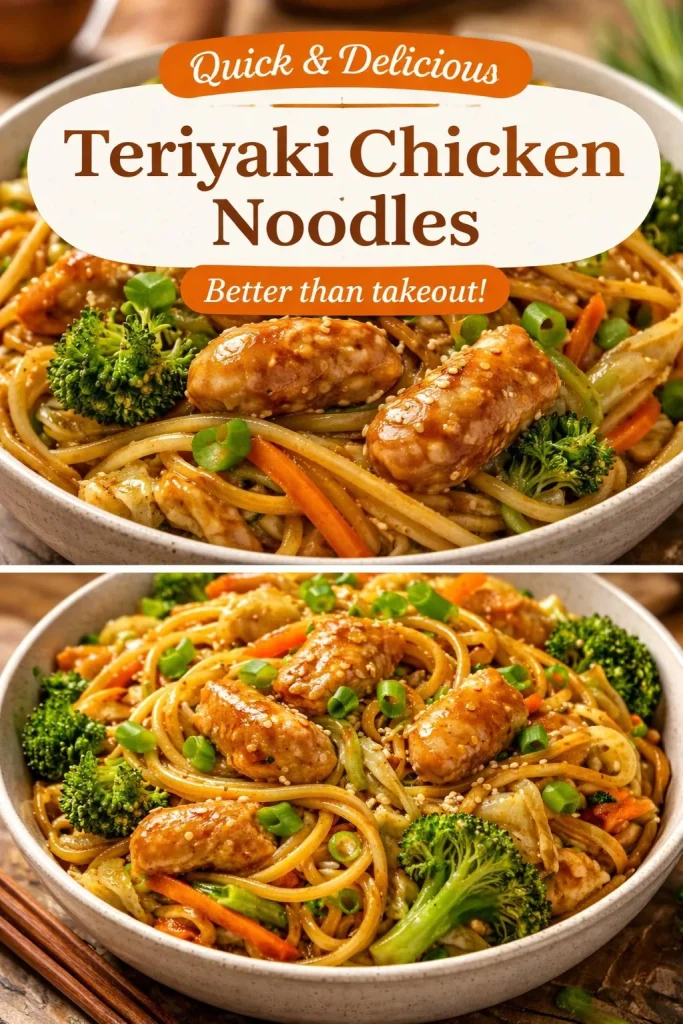
Chicken Chow Mein
Ingredients
Method
- In a small bowl whisk together the oyster sauce, sugar, sesame oil, soy sauce, chicken broth, and cornstarch until smooth. Set aside.
- Boil the chow mein noodles according to package directions. Drain and rinse under cold water to stop cooking and reduce stickiness. Set aside.
- Heat 2 tablespoons of oil in a large wok or skillet over medium-high heat. Season chicken strips lightly with salt and pepper. Add to the hot pan and stir-fry until golden and cooked through, about 5–7 minutes. Remove chicken to a plate.
- Add the remaining tablespoon of oil to the pan. Stir-fry the julienned carrot, shredded cabbage, and minced garlic until vegetables are just tender, about 3–4 minutes.
- Return the chicken and drained noodles to the wok. Pour the prepared sauce over everything. Toss quickly to combine and distribute sauce evenly.
- Continue stirring until the sauce thickens and becomes glossy, about 1–2 minutes. Taste and adjust with a pinch of salt, a splash of soy, or a drizzle of sesame oil if needed.
- Turn off the heat, garnish with chopped green onions, and serve immediately while hot.