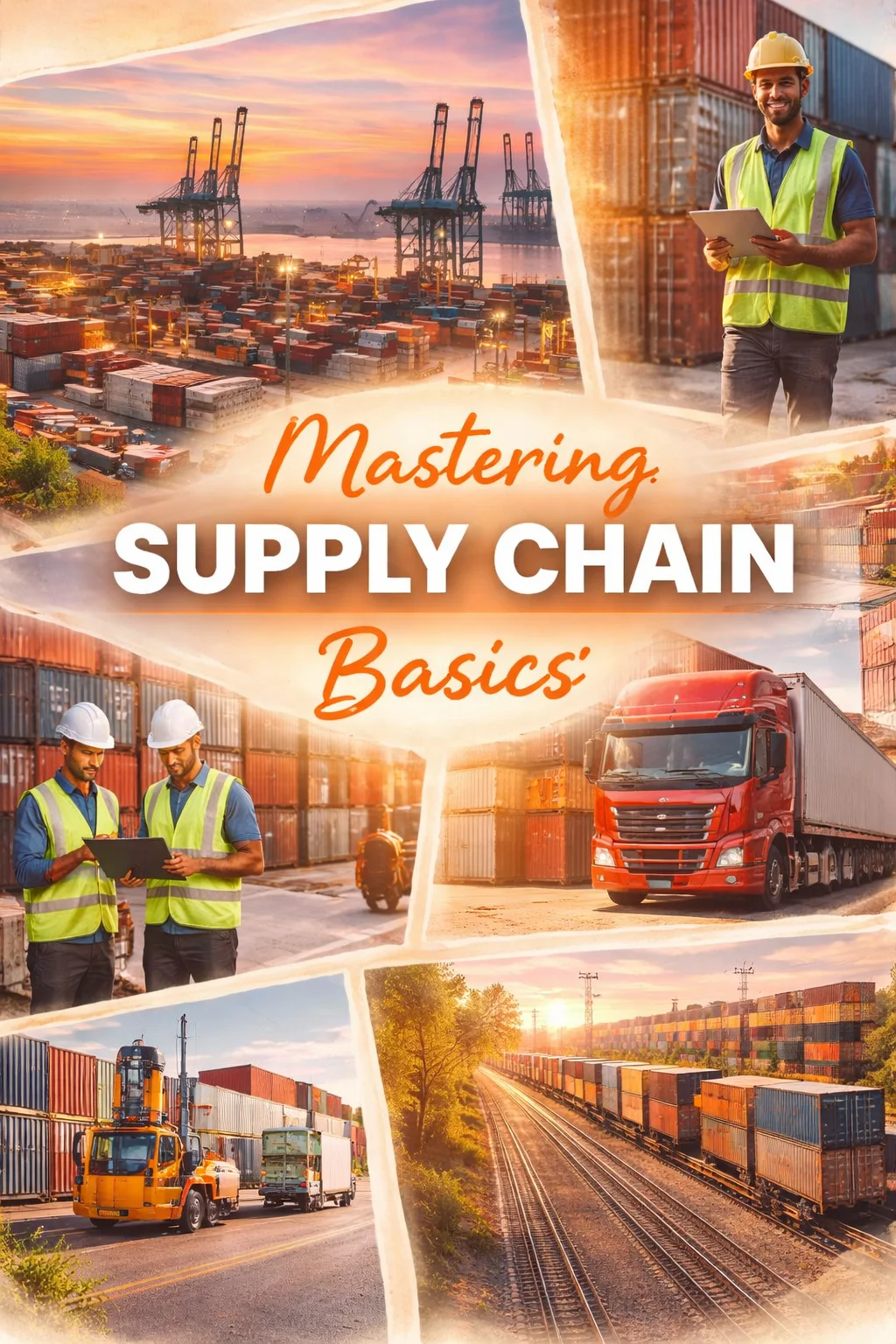
Mastering Supply Chain Management Basics: Simple Insights to Get Started


Okay, so—supply chain management basics probably sound about as exciting as cold toast, right? But stick with me a sec. Ever had a dinner party flop because ingredients didn’t arrive on time? Or maybe your favorite snack vanished from the grocery shelf for weeks? That’s what supply chain hiccups look like in real life. Whether you’re running a restaurant or just trying to figure out why your online order is late (ugh, again), getting the hang of supply chain management helps. Let’s break it down—no fancy terms, pinky promise.
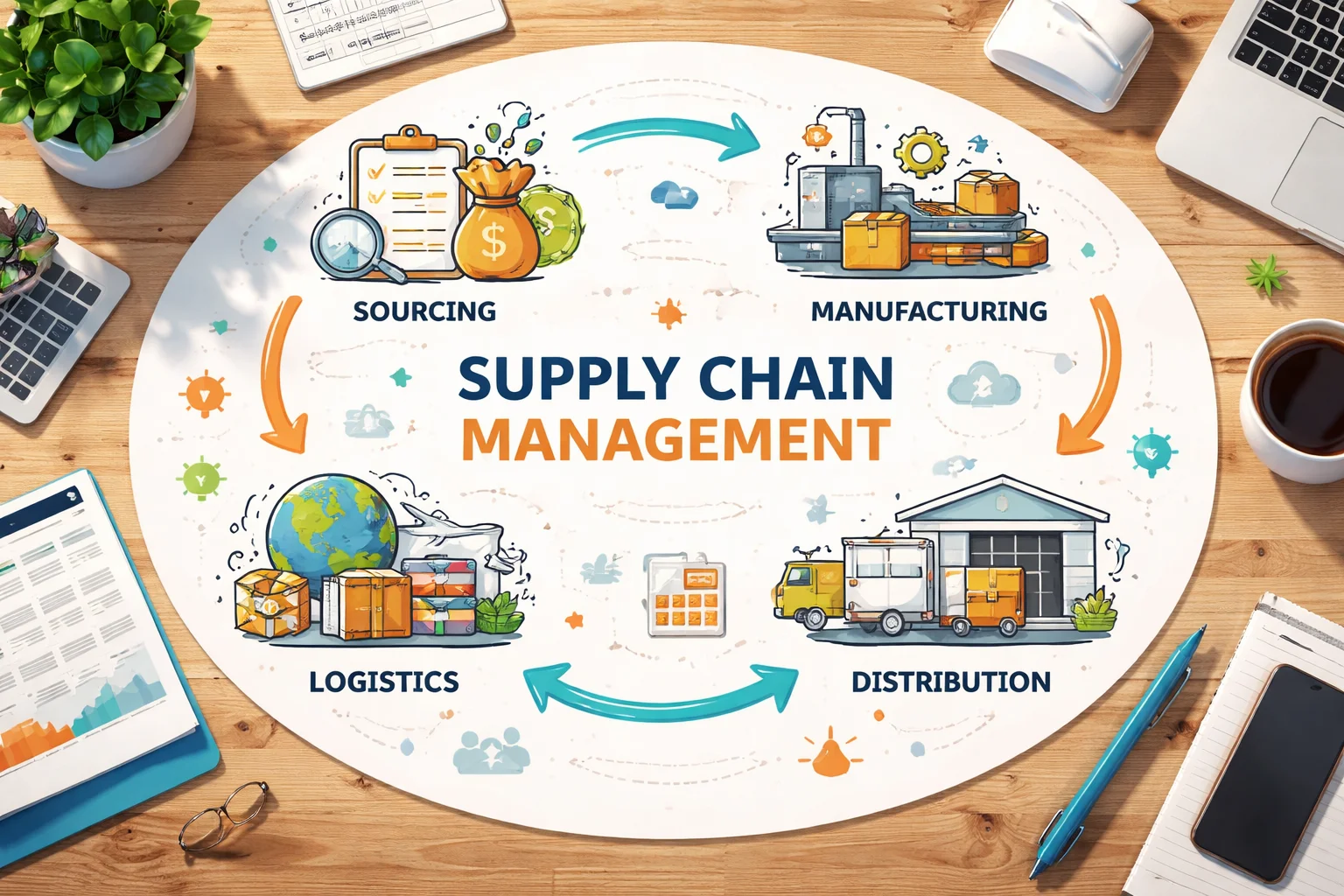
What is Supply Chain Management (SCM)?
Alright, big question first! In plain speak, supply chain management is making sure the stuff you need gets from point A to B—and on time, in good shape, for a decent price. That’s it.
- It covers everything from raw ingredients (like the flour in your pancakes) to shipping the finished product (hello, waffles in a box).
- SCM keeps the flow steady, so shops don’t run out—nobody wants that empty shelf.
- Think of it as a chore list, but for businesses. Each step needs to be spot-on, or things fall apart.
- If everyone in the chain communicates? Magic. If they don’t? Well… chaos.
This reminded me of when my cousin tried to organize a family BBQ and forgot to check if the buns were in stock. Ended up eating burgers in lettuce wraps. Not bad, but not planned!

How Supply Chain Management Works
Basically, it’s a tag team—everyone passing the baton.
- It starts with finding the good stuff (raw materials) and ends with delivering the finished thing to you.
- There are planners, buyers, shippers, warehouse folks—each with their own mini-mission.
- If there’s a hiccup, like a truck stuck in traffic or a warehouse losing power, the whole train slows down.
- Technology and clear talking (emails, calls, texts—name it) help keep things on track.
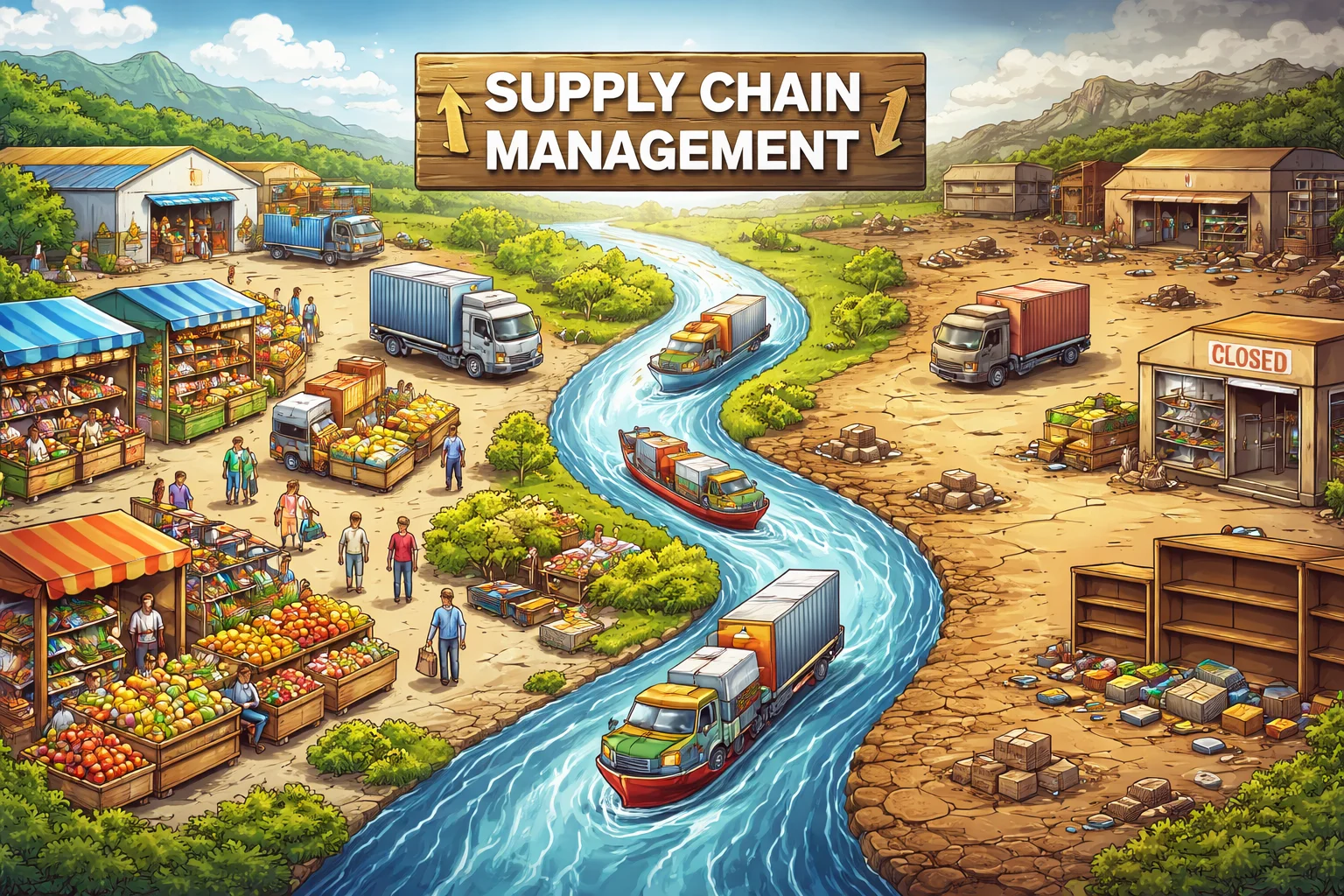
Why is Supply Chain Management Important?
Why bother with all this, anyway?
- It saves money. Less waste, fewer surprise costs (which, in food blogging, means more $ for fancy olive oil!).
- Happy customers. You want your stuff on time. So do I. Reliability is everything.
- Businesses can keep promises—nothing worse than ordering salsa and getting crackers instead. Yikes.
- It helps avoid shortages or huge leftover piles. Seriously, nobody wants a mountain of old bread.
Once, a bakery near me had to throw out trays of pastries because the milk delivery was late. That’s a heartbreaker, and an expensive one.
Understanding the 7 Phases of Supply Chain Management
Let’s slice this up (like pie) so it’s not overwhelming.
- Planning: How much to make or order—too little, you’re toast; too much, you’ve got waste.
- Sourcing: Who’s got the goods? Choose trusted suppliers.
- Manufacturing: Turning raw stuff into the finished thing.
- Delivery: Shipping out to stores or homes—gotta be quick and correct.
- Returns: Sometimes things go wrong—gotta get broken stuff back.
- Enabling: This just means greasing the wheels behind the scenes—IT, paperwork, teamwork.
- Feedback: Learn, fix, improve. Otherwise, you’re stuck in 1993.
How Specright Improves Supply Chain Data Management
Now, about Specright (not a supervillain, it’s software). This tool keeps everyone in sync.
- It tracks what’s coming in and going out—so there’s less guesswork.
- Data is easy to grab. No more lost recipes (or invoices).
- Teams can spot hold-ups fast. It’s like seeing the kitchen timer before you burn the cookies.
- Fewer mistakes, less stress. (Stress-free cooking? Sign me up.)
Common Questions
Q: Is supply chain management only for big companies?
Not at all! Even a local bakery or tiny coffee shop needs it—without a plan, disaster awaits.
Q: Can supply chain management help with food waste?
Definitely. If you know how much to order and when, less goes bad. Fresher food, less guilt.
Q: What’s the biggest challenge in SCM?
Communication. If one part goofs up, the whole system feels it. Like if I forget to check the oven—burnt cake for all.
Q: How do I get started learning more?
Start with your own shopping lists. Notice what runs low fast, or what sits unused. That’s your first taste.
Q: Does tech really help?
Oh, for sure. Spreadsheets, reminders, software—these keep things moving. Otherwise, it’s Post-Its everywhere, which never ends well.
Making Your Supply Chain as Tasty as Your Cooking
Okay—big recap. Supply chain management basics are just making sure things (ingredients, products, whatever) flow smoothly from start to finish. Get your team on the same page, plan ahead, and use a few handy tools—easy enough! If you want to go deeper, check out What Is Supply Chain Strategy? An Overview of the Basics – ASCM. Super useful. Or this beginner’s guide from Specright: Supply Chain Management: A Guide for Beginners – Specright. Need more details? I like this explainer: Supply Chain Management (SCM)?: Definition, processes and more.
Give it a try—even with your next grocery run. You might surprise yourself by how much you already know. Happy managing!