Original Italian Lasagna

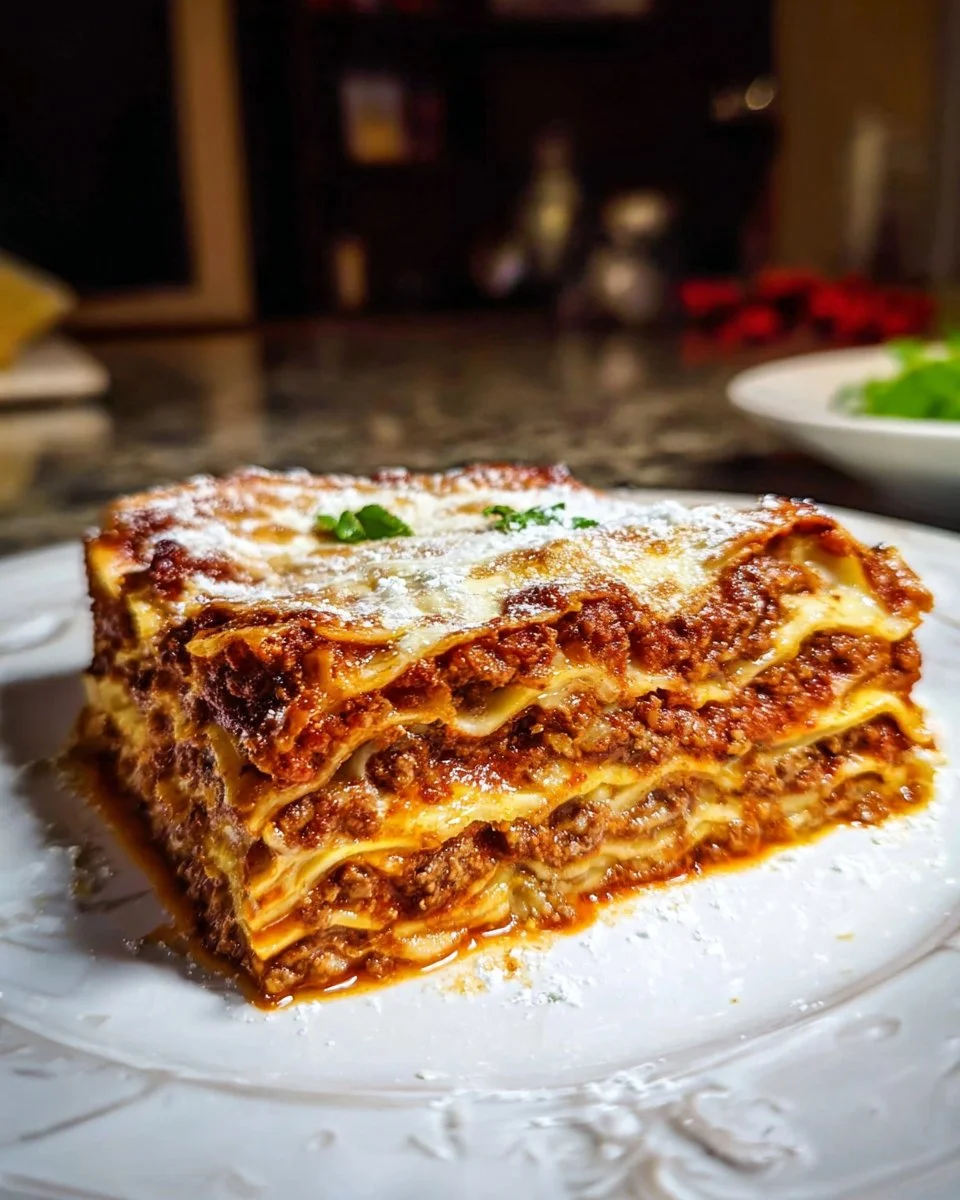
I remember the first time I made this lasagna: the ragù simmered low and slow for hours, the béchamel turned silky, and the house smelled unmistakably Italian. This is a classic, no-frills lasagna built on a rich meat ragù and a creamy béchamel. It’s comfort food at its best — hearty, family-friendly, and ideal for weekends, dinner parties, or when you want leftovers that only get better with time.
Why you’ll love this dish
This lasagna marries two fundamental Italian sauces — a slow-cooked ragù and a smooth béchamel — for a layered bake that’s deeply flavorful and reliably satisfying. It’s perfect when you want a make-ahead meal that feeds a crowd, stretches well on a budget (mixing beef and pork does that), and pleases both kids and adults.
“A true crowd-pleaser — the ragù’s depth and the béchamel’s creaminess make this the kind of lasagna you’ll want to pass down.”
Reasons to try it now:
- Authentic technique: a ragù simmered for about 2 hours builds real depth.
- Make-ahead friendly: assemble ahead and bake later, or freeze for future meals.
- Versatile: easy to tweak for dietary needs or flavor variations.
The cooking process explained
Before you dive into the ingredients and the step‑by‑step, here’s a quick overview of what you’ll do:
- Finely chop the soffritto (carrot, onion, celery).
- Brown beef and pork together, then add the soffritto, rosemary and garlic.
- Deglaze with red wine, add tomato purée and tomato paste, thicken slightly, then simmer the ragù low and slow for ~2 hours.
- Make a classic béchamel (butter + flour roux + warm milk) seasoned with salt and nutmeg.
- Layer dried lasagna sheets with ragù, béchamel and grated Parmesan; bake until bubbling and golden.
- Rest, slice, and serve.
What you’ll need
- 16 dry lasagna sheets
- 120 g freshly grated Parmigiano-Reggiano (Parmesan)
- 250 g ground beef
- 250 g ground pork
- 500 g tomato purée (passata)
- 1 tablespoon all-purpose flour (for ragù)
- 90 g tomato paste
- ½ glass dry red wine (about 75–100 ml)
- 1 carrot, finely chopped
- 1 onion, finely chopped
- 1 celery stalk, finely chopped
- 1 garlic clove, minced
- 1 small sprig rosemary (or ½ tsp dried)
- 3 tablespoons extra-virgin olive oil
- 1 tablespoon salt (for ragù; adjust)
- 500 ml water
- ½ litre warm milk (for béchamel)
- 50 g butter (for béchamel)
- 50 g all-purpose flour (for béchamel roux)
- Nutmeg, freshly grated (to taste)
- Additional salt and black pepper to taste
Notes/substitutions:
- Parmigiano-Reggiano is ideal, but a good aged Parmesan works.
- If you prefer a lighter protein, use turkey or chicken mince but cook slightly less time to avoid drying.
- If short on time, you can shorten the ragù simmer to 45–60 minutes, but longer yields better depth.
Step-by-step instructions
- Prep the soffritto: finely chop the carrot, onion and celery (use a food processor or a sharp knife). Mince the garlic and strip the rosemary leaves.
- Brown the meats: heat 3 tablespoons of olive oil in a large nonstick or heavy-bottomed skillet over medium-high heat. Add the ground beef and pork. Stir and break up the meat; cook until lightly browned but not fully dry (3–5 minutes). Drain excess fat if there’s a lot.
- Add vegetables and aromatics: stir in the chopped carrot, onion, celery, rosemary and garlic. Cook on medium-high until the vegetables soften and the meat is well browned (about 5–7 minutes).
- Deglaze with wine: pour in the red wine and scrape any browned bits from the pan. Let the wine reduce until mostly evaporated (2–3 minutes).
- Build the ragù: add the tomato purée, tomato paste, 1 tablespoon flour and 1 tablespoon salt. Stir to combine so the flour helps slightly thicken the sauce.
- Simmer low and slow: pour in 500 ml water, bring to a gentle simmer, then reduce heat to low. Partially cover and simmer very gently for approximately 2 hours, stirring occasionally and breaking up any clumps. If it gets too thick, add a splash of water. Taste toward the end and adjust salt.
- Warm the milk: in a medium saucepan, warm the ½ litre milk until just warm (do not boil). Keep it warm off the heat.
- Make the béchamel: in another saucepan, melt 50 g butter over low heat. Remove from heat and whisk in 50 g flour little by little to form a smooth paste (roux). Return to low heat and slowly pour in the warm milk while whisking constantly to avoid lumps. Add a pinch of nutmeg and salt to taste. Continue stirring on low until the sauce thickens to a creamy consistency (it should coat the back of a spoon). Remove from heat.
- Assemble the lasagna: preheat oven to 180°C / 350°F. In a 23×33 cm (9×13 in) baking dish, spread a thin layer of ragù on the bottom (about 1 cup). Lay down lasagna sheets (overlap slightly if needed). Spoon a layer of ragù over the pasta, then some béchamel, and sprinkle with grated Parmesan. Repeat layers (pasta → ragù → béchamel → Parmesan) ending with a final layer of béchamel and a generous sprinkle of Parmesan. Aim for 3–4 layers depending on the dish depth. If using dry sheets and you prefer a softer pasta, you can briefly boil sheets 4–5 minutes before layering, but with ample ragù and béchamel they should hydrate in the oven.
- Bake: cover loosely with foil and bake for 25–30 minutes. Remove the foil and bake another 10–15 minutes until the top is golden and the edges are bubbling.
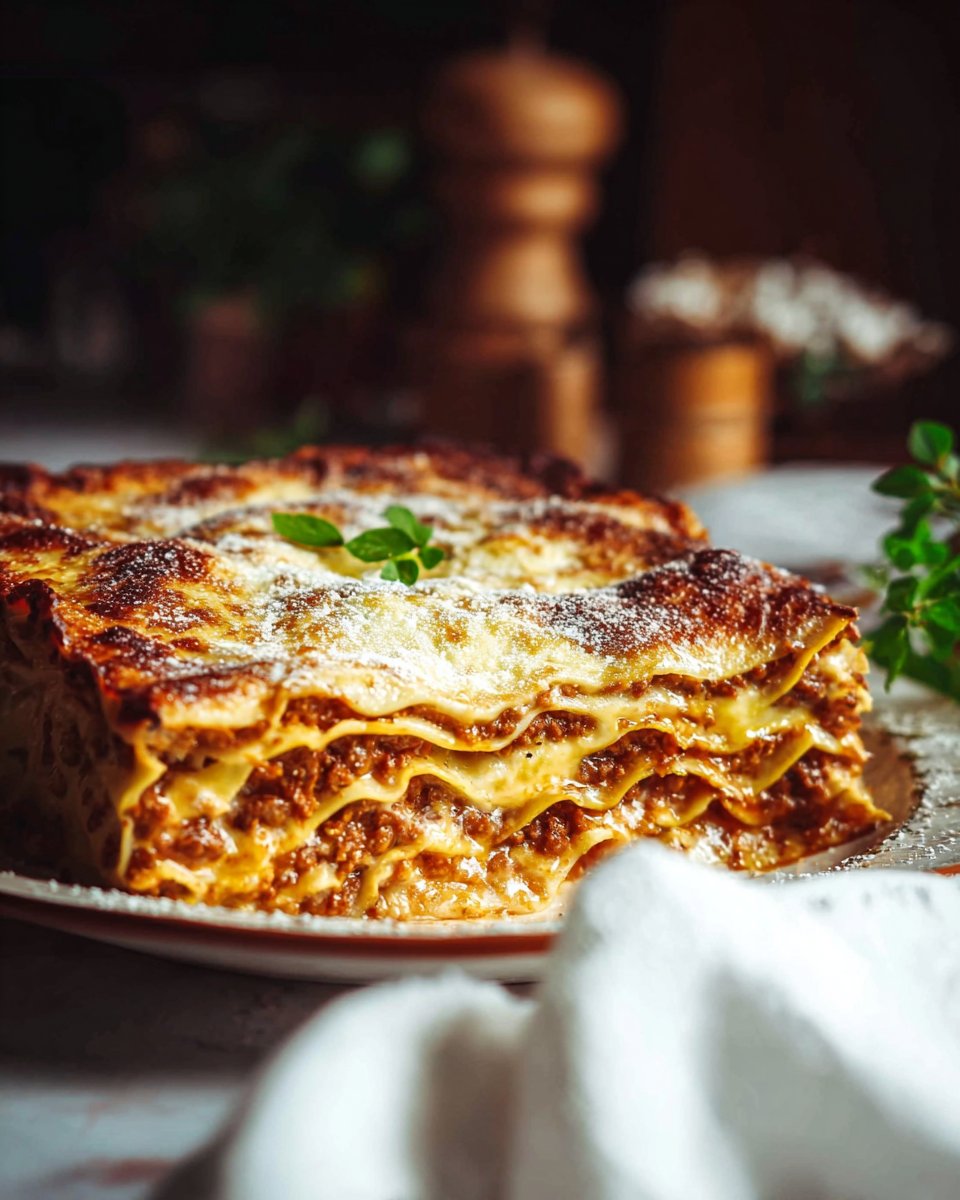
- Rest and serve: let the lasagna rest for at least 15 minutes before slicing — this helps it set and makes neat slices.
Best ways to enjoy it
Serve slices with:
- A simple green salad (peppery arugula with lemon vinaigrette cuts the richness).
- Roasted or steamed seasonal vegetables.
- Crusty bread or garlic focaccia to mop up any leftover ragù.
Pair with a medium-bodied red wine (Chianti, Sangiovese, or a Montepulciano) or sparkling water with lemon for a family-friendly option.
Storage and reheating tips
- Refrigerator: Cool to room temperature, cover tightly and refrigerate for up to 3–4 days.
- Freezing: Wrap individual slices or the whole unbaked assembled pan (tightly with foil, then plastic wrap) for up to 3 months. Thaw overnight in the fridge before baking or reheating.
- Reheating: From fridge, reheat covered in a 175°C / 350°F oven for 20–30 minutes until hot throughout. From frozen, bake covered at 175°C / 350°F for ~45–60 minutes, then uncover to brown the top. Always reheat to an internal temperature of 74°C / 165°F for safety.
- Safety tip: Don’t leave lasagna at room temperature for more than 2 hours (1 hour if the room is hot). Cool promptly before refrigerating.
Pro chef tips
- Use low heat when making béchamel and whisk constantly to prevent lumps and scorching. A silicone spatula helps scrape the bottom.
- Skim excess fat from the ragù for a cleaner flavor. Leave a little for mouthfeel.
- If ragù tastes a little acidic after long simmering, a small pinch of sugar or a knob of grated carrot at the start balances it naturally.
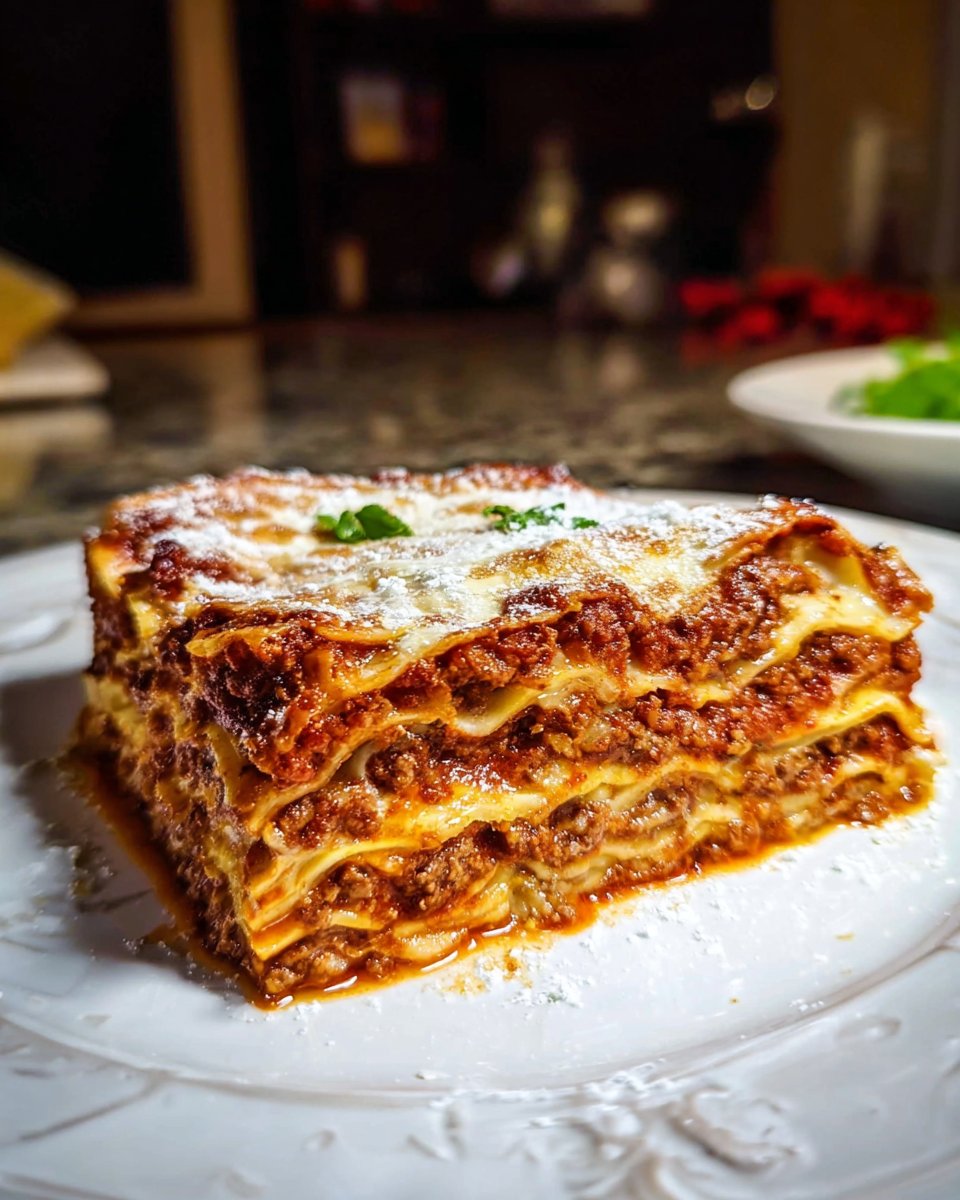
- For neat slices, allow the lasagna to rest 15–30 minutes after baking; the layers set and hold together better.
- Grate Parmesan fresh — pre-grated cheese often contains anti-caking agents that affect melt and texture.
Creative twists
- Vegetarian: Replace meats with a mixture of sautéed mushrooms, lentils or finely chopped walnuts and add a pinch of soy sauce for umami.
- Spinach & ricotta: Add a ricotta-spinach layer (300 g ricotta + 200 g cooked, squeezed spinach + egg + salt/pepper) between ragù layers.
- Cheesy variation: Mix grated mozzarella with the Parmesan between layers for extra gooeyness.
- Regional spin: Stir a splash of cream into the ragù near the end for a richer, Tuscan-style finish.
- Gluten-free: Use certified gluten-free lasagna sheets and a gluten-free flour blend for the béchamel.
Your questions answered
Q: Can I use no-boil lasagna sheets with this recipe?
A: Yes. No-boil (oven-ready) sheets work well because ragù and béchamel provide moisture. Ensure your sauces are slightly loose; if very thick, add a little water when assembling so the sheets can hydrate during baking.
Q: How long does the ragù need to simmer?
A: Ideally around 2 hours on very low heat for depth and concentration. If pressed for time, 45–60 minutes will still produce a tasty sauce but with less complexity.
Q: Can I assemble this ahead of time?
A: Absolutely. Assemble the lasagna up to 24 hours ahead, cover tightly and refrigerate. Bake from chilled, adding ~10–15 minutes to the bake time. You can also freeze the unbaked assembled pan for longer storage.
Q: Do I have to use both beef and pork?
A: No — the mix adds richness and complexity, but using only beef (or only pork) is fine. For leaner results, choose a higher lean percentage or drain excess fat after browning.
Q: How do I prevent watery lasagna?
A: Avoid overly watery ragù or béchamel. Simmer ragù until slightly reduced. Make béchamel thick enough to coat the back of a spoon. Also, don’t overdo watery vegetables — squeeze excess moisture from cooked spinach if used.
Conclusion
If you want a classic, deeply satisfying lasagna that rewards time and patience, this original Italian approach — slow ragù layered with creamy béchamel — is a go-to. For further inspiration and variations on traditional lasagna techniques, see this excellent Lasagne al Forno (Italian Beef Lasagna) – Inside The Rustic Kitchen and the historical perspective in Lasagna, the Original Recipe – La Cucina Italiana. Buon appetito — and don’t forget the resting time after baking for perfect slices.
Lasagna with Ragù and Béchamel
Ingredients
Method
- Finely chop the soffritto (carrot, onion, celery) and mince the garlic.
- Heat olive oil in a large skillet and brown ground beef and pork for 3–5 minutes.
- Add chopped vegetables, rosemary, and garlic. Cook until softened.
- Deglaze with red wine and reduce for 2–3 minutes.
- Add tomato purée, tomato paste, flour, and salt. Stir to combine.
- Simmer ragù low and slow for about 2 hours, adjusting consistency as needed.
- Warm the milk for the béchamel in a saucepan.
- Melt butter in another saucepan, whisk in flour to form a roux. Gradually add warm milk while whisking until thick.
- Preheat oven to 180°C / 350°F.
- Layer ingredients in a baking dish: start with a layer of ragù, followed by lasagna sheets, béchamel, and Parmesan. Repeat layers.
- Finish with a layer of béchamel and top with Parmesan.
- Bake covered with foil for 25–30 minutes, then remove foil and bake for another 10–15 minutes until golden.
- Let rest for at least 15 minutes before slicing and serving.