Airy Lavender Meringues

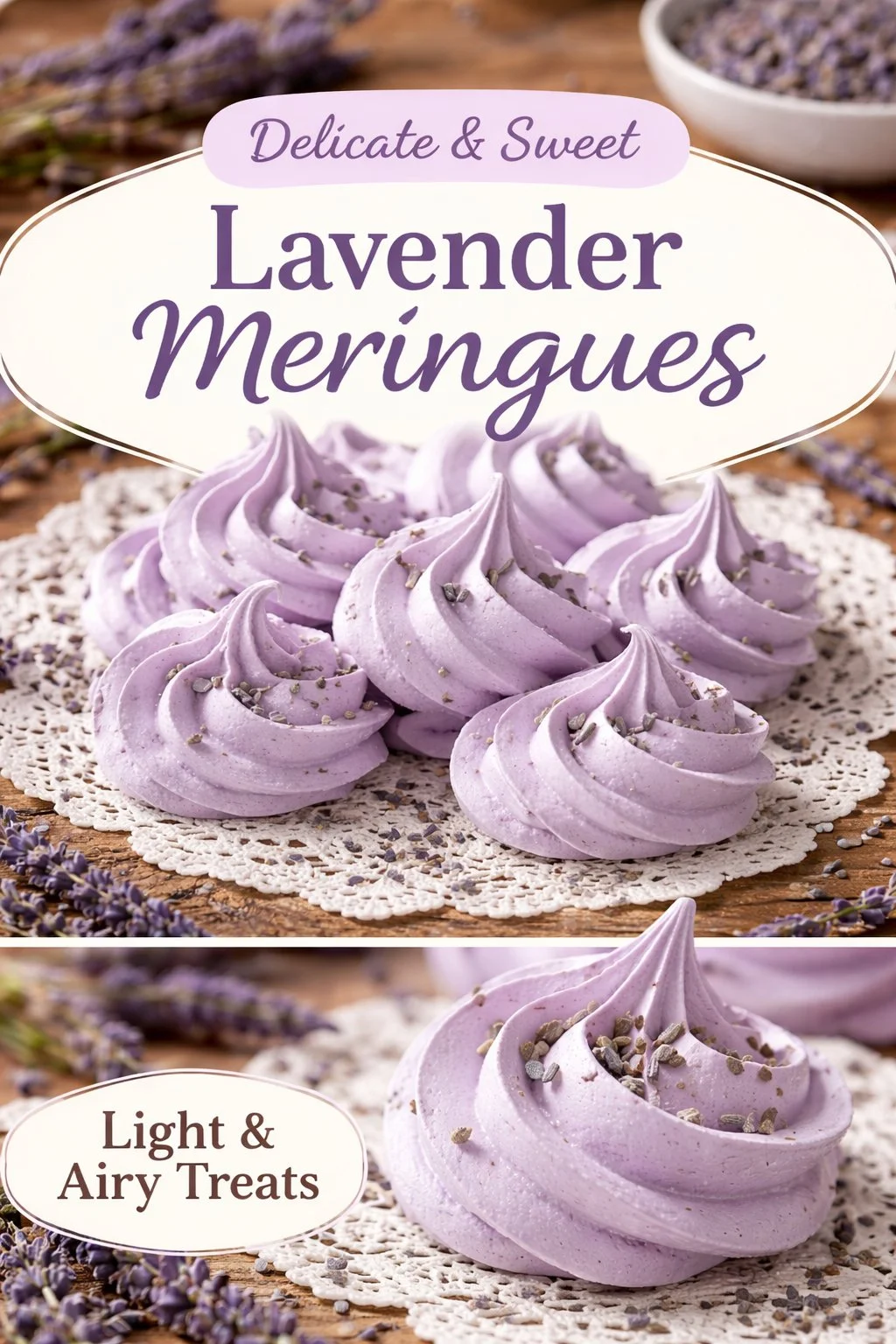
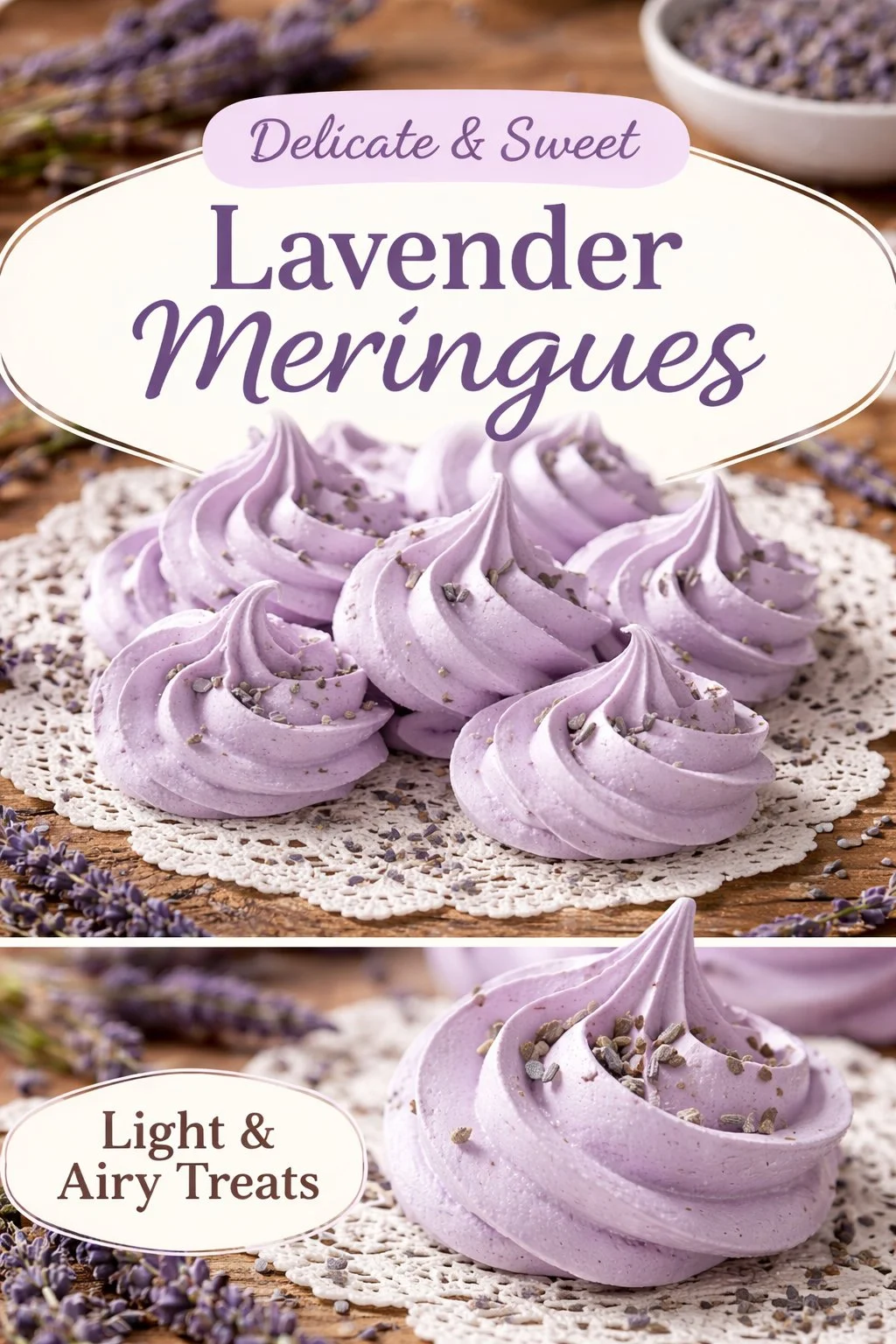
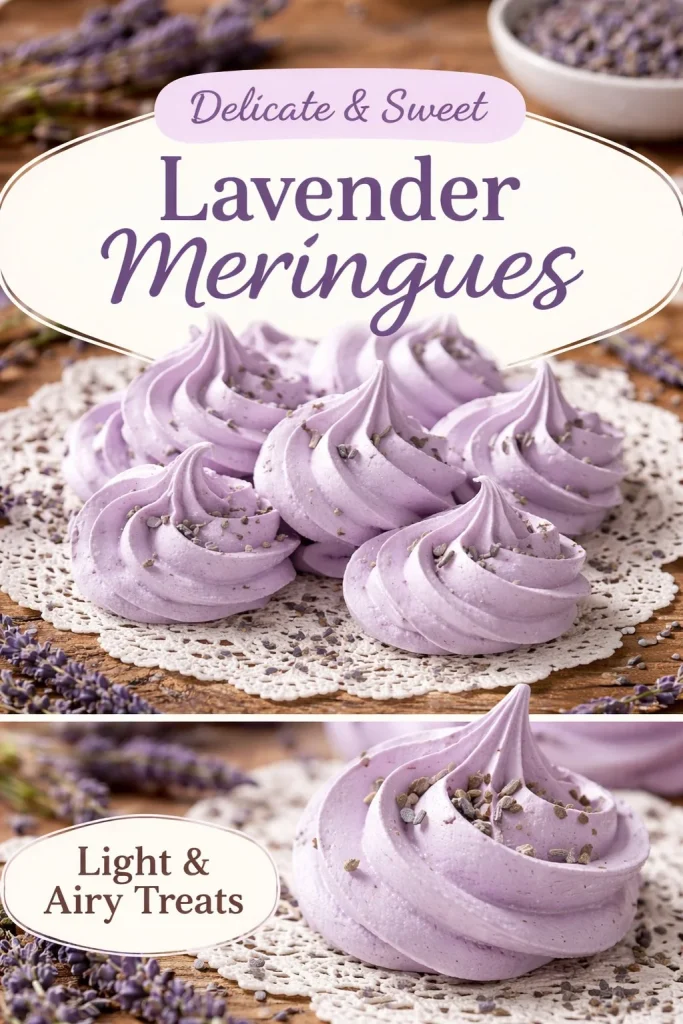
I still remember the first time I piped these delicate lavender kisses — the kitchen smelled like a summer field and the crunchy exterior gave way to an almost marshmallow-soft center. These airy lavender meringues are a simple, elegant treat: crisp, floral, and surprisingly quick to make when you know the tricks. Perfect for gifting, tea time, or finishing a special meal, they showcase culinary lavender without overpowering the sugary sweetness.
Why you’ll love this dish
Light as air and quietly fragrant, these lavender meringues feel fancy but are low-effort. You don’t need pastry-school skills to get a beautiful result — just a clean bowl, patience, and a few key techniques. They’re ideal for afternoon tea, bridal showers, or when you want a pretty, gluten-free dessert that stores well at room temperature.
“Crisp shell, pillowy inside, and just a hint of lavender — these were the prettiest bite of my tea party.” — a simple, honest review
Besides being delightful on their own, meringues are:
- Budget-friendly: a little sugar and a couple of egg whites go a long way.
- Make-ahead friendly: bake and store them days in advance.
- Customizable: color, flavor, and size are easy to tweak.
How this recipe comes together
Step-by-step overview: You whip room-temperature egg whites with cream of tartar to build stable foam, gradually add sugar to create glossy, structured peaks, fold in crushed culinary lavender and a whisper of vanilla, then pipe small mounds. Low-temperature baking slowly removes moisture so the exterior crisps while the inside stays slightly tender. Finally, cooling in the switched-off oven finishes them gently and prevents cracking.
This process takes patience more than active work: about 10 minutes of hands-on time, then several hours of quiet oven cooling.
What you’ll need
Ingredient list:
- 2 large egg whites, at room temperature (see notes below)
- 1/8 teaspoon cream of tartar
- 1/2 cup granulated sugar
- 1/4 teaspoon vanilla extract
- 2–3 teaspoons culinary lavender, finely crushed (culinary grade only)
- Purple food coloring, optional
Notes/substitutions:
- Egg whites: room temperature whips up faster and to greater volume; if you prefer, use pasteurized egg whites for safety.
- Cream of tartar stabilizes the foam; you can substitute an equal pinch of lemon juice if needed.
- For a vegan version, use aquafaba (see conclusion link for a vegan recipe reference).
How to prepare it
Step-by-step directions:
- Preheat the oven to 200°F (about 95°C). Line a baking sheet with parchment paper.
- In a completely clean, dry mixing bowl, beat the egg whites on medium-low until slightly opaque and frothy (about 20–60 seconds). Any grease or yolk will prevent the whites from whipping properly.
- Add the cream of tartar and increase the mixer speed to medium-high. Beat until the whites thicken and turn bright white (about 90–120 seconds).
- With the mixer running, slowly sprinkle in 1/4 cup of the sugar until it dissolves and the mixture is glossy. Then add the remaining sugar, vanilla extract, and the crushed lavender. Mix on low just until combined.
- If you want a pop of color, add a single drop of purple food coloring and gently swirl with a spatula — don’t overmix or deflate the foam.
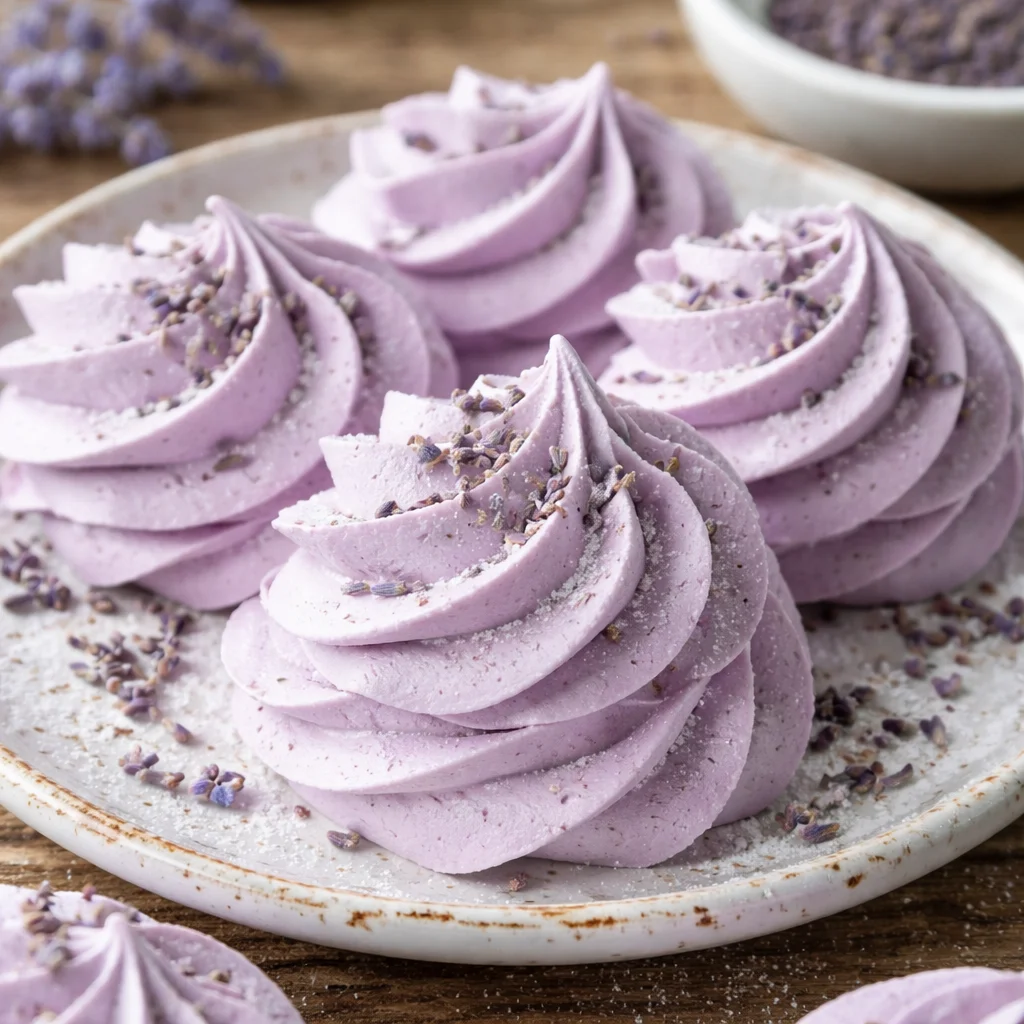
- Transfer the meringue to a piping bag fitted with a round tip and pipe walnut-sized mounds onto the prepared sheet, leaving space between each.
- Bake at 200°F for 90 minutes without opening the oven. After 90 minutes, turn off the oven and leave the meringues inside to cool completely — several hours or overnight — to fully dry out.
- Once cooled, transfer to an airtight container and keep at room temperature.
Best ways to enjoy it
Serving suggestions:
- Tea-time classic: pair with Earl Grey or chamomile to echo the floral notes.
- Dessert plate: serve alongside a small scoop of lemon sorbet to cut the sweetness.
- Gift idea: lay in a pretty box with parchment and a ribbon — they travel well if kept dry.
- Elegant garnish: crush a few and sprinkle over panna cotta or whipped cream for texture.
For plating, arrange meringues on a white plate with a few dried lavender buds (sparingly) or edible flowers for a sophisticated look.
Storage and reheating tips
Keeping leftovers fresh:
- Store completely cooled meringues in an airtight container at room temperature. They will keep best for up to 1–2 weeks if humidity is low.
- Do not refrigerate — the moisture will soften them.
- If they soften because of humid conditions, return them to a low oven (200°F) for 10–15 minutes to crisp them up again, then cool in the oven.
- Freezing: you can freeze baked, cooled meringues in a sealed container for up to 3 months. Thaw at room temperature — avoid condensation by keeping them sealed until fully thawed.
Food safety note: these meringues contain raw egg whites that are baked; if you have concerns about raw eggs, use pasteurized whites or the aquafaba vegan method.
Helpful cooking tips
Practical, experience-based tips:
- Clean bowl and tools: fat prevents egg whites from whipping. Wipe bowls with a little lemon or vinegar if you suspect residue.
- Room temperature whites whip better and faster — separate eggs when cold, then let whites sit 20–30 minutes.
- Sugar technique: adding sugar slowly and ensuring it dissolves results in glossy, stable meringue; you can test by rubbing a bit between fingertips — it should feel smooth, not grainy.
- Don’t rush the cool-down: leaving meringues in the switched-off oven prevents cracks from rapid temperature changes.
- Size control: pipe uniform walnut-sized mounds for even baking; tiny kisses will be crispier, larger mounds will be softer inside.
- Lavender amount: start with 2 teaspoons if you prefer subtle floral notes; 3 teaspoons for a stronger aroma. Always use culinary-grade lavender and crush it finely to avoid chewy bits.
Creative twists
Flavor swaps and variations:
- Lemon-lavender: fold in 1 teaspoon lemon zest for brightness.
- Chocolate-dipped: once cooled, dip bottoms in tempered dark chocolate and let set.
- Vanilla bean: swap vanilla extract for scraped vanilla bean for deeper flavor.
- Color play: marbling technique — place a thin line of gel color inside the piping bag before adding meringue for pretty streaks.
- Vegan option: make aquafaba meringues with chickpea brine (see linked vegan recipe in conclusion).
- Spiced: add a pinch of cardamom or ground ginger for a warming twist.
Your questions answered
Q: How long does the whole process take?
A: Hands-on time is about 10–15 minutes. Baking plus cooling is lengthy: 90 minutes in the oven, then several hours or overnight to fully dry and cool.
Q: Can I use dried lavender from the garden?
A: Yes if it’s culinary (unsprayed) and finely crushed. Avoid ornamental lavender that may be treated with pesticides. Crush the buds to prevent gritty bites.
Q: Are these safe for children or pregnant people?
A: Because egg whites are cooked (baked), the risk is reduced, but if you or someone you’re serving is immunocompromised, pregnant, or concerned about raw egg, use pasteurized egg whites or an aquafaba (vegan) version instead.
Q: My meringues are sticky after baking — why?
A: Sticky meringues are usually due to humidity or insufficient drying. Make sure the oven temperature is low and keep them in the oven to cool completely. Store in a dry place and avoid refrigeration.
Q: Can I make these larger or sandwich them with filling?
A: Yes — larger meringues will have a chewier center. For sandwich cookies, pair two meringues with a small dollop of buttercream, lemon curd, or chocolate ganache, and assemble just before serving.
Conclusion
If you want a floral, elegant confection that feels special without complicated technique, these airy lavender meringues are a wonderful choice. For a classic recipe reference and extra inspiration, see Airy Lavender Meringues – The Artisan Life. If you’d prefer a vegan alternative using aquafaba, check this helpful guide: Vegan Lavender Aquafaba Meringues.
Airy Lavender Meringues
Ingredients
Method
- Preheat the oven to 200°F (about 95°C). Line a baking sheet with parchment paper.
- In a completely clean, dry mixing bowl, beat the egg whites on medium-low until slightly opaque and frothy, for about 20–60 seconds.
- Add the cream of tartar and increase the mixer speed to medium-high. Beat until the whites thicken and turn bright white for about 90–120 seconds.
- With the mixer running, slowly sprinkle in 1/4 cup of the sugar until it dissolves and the mixture is glossy. Then add the remaining sugar, vanilla extract, and crushed lavender, mixing on low just until combined.
- Add a drop of purple food coloring if desired and gently swirl with a spatula, being careful not to overmix.
- Transfer the meringue to a piping bag fitted with a round tip and pipe walnut-sized mounds onto the prepared sheet, leaving space between each.
- Bake at 200°F for 90 minutes without opening the oven. After 90 minutes, turn off the oven and leave the meringues inside to cool completely for several hours or overnight.
- Once cooled, transfer meringues to an airtight container and keep at room temperature.