Beef Giouvetsi

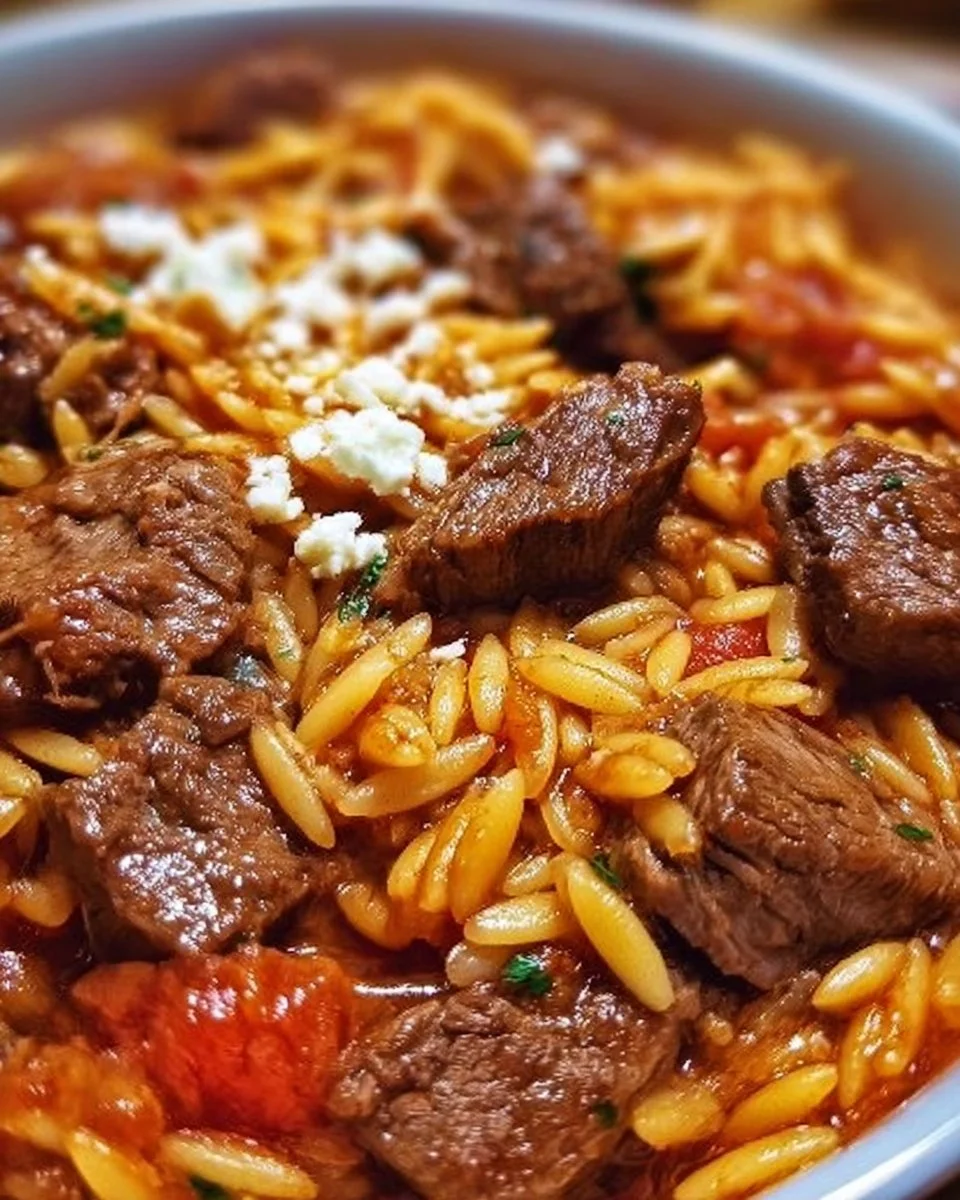
I first tried this Beef Giouvetsi on a rainy night when I wanted something warming, unfussy, and comforting. It’s a Greek-style beef stew cooked slowly until the meat melts, then finished with orzo that soaks up all the tomatoey juices. The result is rich, slightly spiced, and great for feeding a family or making ahead for weekday dinners.
Why you’ll love this dish
Giouvetsi balances pantry-friendly ingredients with deep, homey flavor. A few reasons to make it:
- Economical: uses affordable beef cuts and a small amount of pasta to stretch servings.
- Comforting and hands-off: most of the time is slow, unattended simmering.
- Crowd-pleaser: the tender beef + saucy orzo texture appeals to kids and adults alike.
- Flexible: easy to adapt to slow cooker, oven-baked or vegetarian versions.
“One pot, unforgettable flavor—every spoonful tasted like a weekend simmer even though I made it on a weeknight.” — a quick review from a home cook
The cooking process explained
Before you dive in, here’s a quick roadmap so you know what to expect:
- Brown the beef to build flavor.
- Sauté aromatics (onion, garlic) and add tomatoes, broth, and warm spices.
- Simmer low and slow until beef is fork-tender (1.5–2 hours).
- Stir in orzo during the final 15 minutes so it cooks in the stew and absorbs the sauce.
- Finish with grated cheese and serve with crusty bread or a simple salad.
This overview helps you pace prep: active time is mostly searing and a final stir; the long simmer does the heavy lifting.
What you’ll need
- 2 lbs beef, cut into 1–1.5 inch cubes (chuck or stewing beef recommended)
- 1 cup orzo pasta (regular orzo; use gluten-free orzo to make GF)
- 1 can (14 oz) diced tomatoes
- 1 medium onion, chopped
- 3 cloves garlic, minced
- 1 cup beef broth (plus extra if needed)
- 1 teaspoon dried oregano
- 1 teaspoon ground cinnamon
- Salt and pepper, to taste
- Grated cheese (feta or Parmesan) for topping
- Olive oil for cooking
Substitutions and notes:
- Beef: chuck is ideal because it becomes tender during long simmer. Sirloin will be leaner but less forgiving.
- Broth: substitute low-sodium chicken broth or vegetable broth for a milder base.
- Orzo: use risoni or small pasta shapes; for gluten-free, choose a certified gluten-free orzo or swap for short-grain rice.
- Cheese: feta gives a tangy finish; Parmesan adds nutty saltiness.
Step-by-step overview
- Sear beef in olive oil for deep brown crusts.
- Sweat onions and garlic in the same pot to pick up browned bits.
- Add tomatoes, broth, oregano, cinnamon, salt and pepper; simmer covered until beef is tender.
- Add orzo near the end so it cooks in the sauce and thickens it.
- Finish with grated cheese and serve hot.
Directions to follow
- Heat 2 tablespoons olive oil in a large, heavy pot over medium heat. Pat beef cubes dry and brown them in batches so they color evenly. Transfer browned pieces to a plate.
- Add the chopped onion to the pot and cook until soft and translucent, about 5–7 minutes. Stir in the minced garlic and cook 30–60 seconds until fragrant.
- Return the beef to the pot. Pour in the diced tomatoes (with juices) and 1 cup beef broth. Stir in oregano, ground cinnamon, and a generous pinch of salt and pepper. Scrape up any browned bits from the bottom of the pot.
- Bring the mixture to a gentle simmer. Reduce heat to low, cover, and let it cook for 1.5 to 2 hours, checking at the 1-hour mark. The beef should be fork-tender and the sauce reduced.
- With about 15 minutes left, stir in the orzo. If the stew looks too thick or the orzo needs more liquid, add a splash more broth or water. Simmer uncovered, stirring occasionally, until the orzo is cooked al dente and has absorbed some sauce.
- Taste and adjust seasoning. Serve hot, topped with grated feta or Parmesan. Accompany with crusty bread and a crisp Greek salad.
Best ways to enjoy it
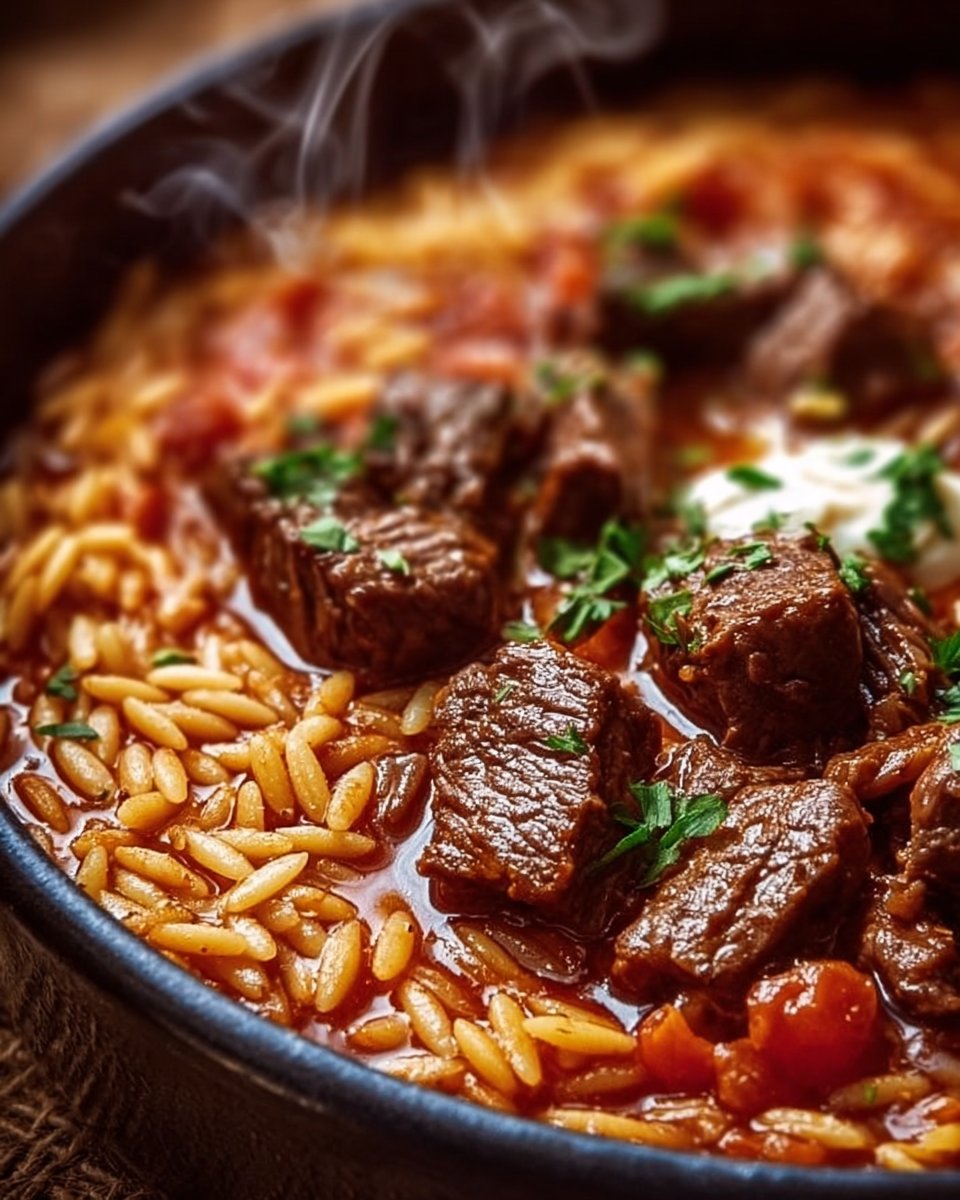
- Spoon into wide bowls and top with crumbled feta and a drizzle of good olive oil.
- Serve with crusty bread for sopping up juices or a simple Greek salad (cucumber, tomato, red onion, oregano, olive oil).
- For a heartier plate, add roasted vegetables or a side of lemony sautéed greens.
- Leftovers are great over mashed potatoes or even spread on toasted baguette slices for an open-faced supper.
How to store & freeze
- Refrigerator: cool to room temperature and store in airtight containers within 2 hours. Keeps 3–4 days.
- Freezer: portion into freezer-safe containers or heavy-duty bags and freeze up to 3 months. Thaw overnight in the fridge before reheating.
- Reheating: gently warm on the stovetop over low heat, stirring and adding a splash of broth if thickened. Microwave in covered dish in 1–2 minute bursts, stirring between intervals.
- Food safety tip: always reheat to steaming hot (165°F / 74°C) before serving.
Pro chef tips
- Don’t rush browning: properly caramelized meat gives the stew depth—work in batches so the beef doesn’t stew in its own liquid.
- Deglaze well: after searing, scrape the fond (browned bits) with a splash of broth; that’s where much of the flavor lives.
- Cinnamon is subtle: use the teaspoon sparingly—its warmth should be background, not overpowering.
- Watch the orzo: it absorbs a lot of liquid and can overcook fast. Add it late and check frequently.
- Make-ahead advantage: flavors deepen after a day, so this is an ideal dish to make ahead and reheat.
Flavor swaps
- Creative twists:
- Lamb Giouvetsi: swap beef for lamb shoulder for a more Mediterranean note.
- Tomato-free variant: use roasted red peppers and beef stock for a different tang.
- Vegetarian: replace beef with mushrooms and white beans; use vegetable broth and add a splash of balsamic for richness.
- Spicier: add a pinch of smoked paprika or a dash of Aleppo pepper.
- Oven-baked version: after searing, combine everything in a Dutch oven and bake at 325°F (160°C) for 1.5–2 hours until beef is tender; add orzo at the end.
Helpful answers
Q: How long does the whole recipe take?
A: Active hands-on time is about 25–35 minutes (browning and prep). Total time is roughly 2 hours including the simmer.
Q: Can I use a slow cooker?
A: Yes. Sear the beef and sauté the onions first for best flavor, then transfer to a slow cooker with tomatoes, broth, and spices. Cook on low for 6–8 hours. Add orzo for the last 30–45 minutes (or cook the orzo separately and stir in before serving).
Q: Will the orzo get mushy if I make this ahead?
A: Orzo can absorb liquid and soften over time. To avoid mushiness, undercook the orzo slightly when making ahead, or store stew and orzo separately and combine when reheating.
Q: What cut of beef is best?
A: Chuck or stewing beef is best because connective tissue breaks down into gelatin with long, slow cooking, creating tender meat and a silky sauce.
Q: Is it safe to freeze with orzo already cooked inside?
A: Yes, but the texture may soften after thawing. For best quality, freeze the stew without orzo or undercook the orzo and finish cooking after thawing.
Conclusion
Beef Giouvetsi is a cozy, economical one-pot dinner that rewards a little patience with deeply developed flavor and tender beef. If you want a traditional take or more technique ideas, check this Giouvetsi recipe (Greek Beef stew with Orzo pasta) at My Greek Dish for regional notes and variations. For another perspective and a casserole-style version, see Giouvetsi / Youvetsi (Greek Beef Stew and Orzo Casserole …) on Mission Food.

Beef Giouvetsi
Ingredients
Method
- Heat olive oil in a large, heavy pot over medium heat. Pat beef cubes dry and brown them in batches, transferring browned pieces to a plate.
- Add the chopped onion to the pot and cook until soft and translucent, about 5–7 minutes. Stir in minced garlic and cook for 30–60 seconds until fragrant.
- Return the beef to the pot. Pour in diced tomatoes (with juices) and 1 cup beef broth. Stir in oregano, ground cinnamon, and a generous pinch of salt and pepper.
- Bring the mixture to a gentle simmer, reduce heat to low, cover, and let it cook for 1.5 to 2 hours, checking at the 1-hour mark.
- With about 15 minutes left, stir in the orzo. If the stew looks too thick, add a splash more broth or water.
- Simmer uncovered, stirring occasionally, until the orzo is cooked al dente and has absorbed some sauce.
- Taste and adjust seasoning. Serve hot, topped with grated feta or Parmesan.