Creamy Miso Udon


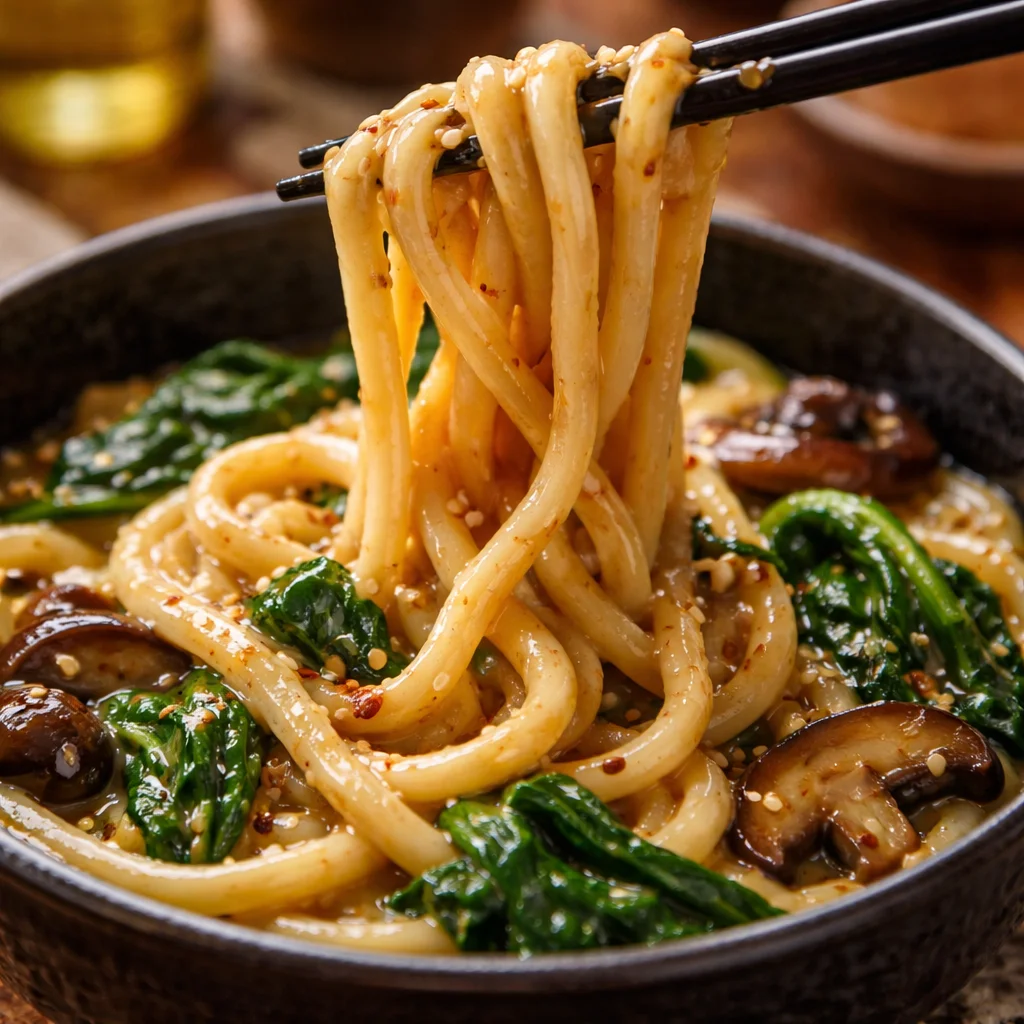
I still remember the first weeknight I pulled this together: a quick simmer, a whisk of miso into warm coconut milk, and suddenly plain noodles became comforting, rich, and cozy. This creamy miso udon is exactly that — an indulgent, five-ingredient noodle bowl that’s perfect when you want something fast, soothing, and a little different from the usual soy-sauce-splash stir-fry.
Why you’ll love this dish
This recipe is all about big flavor from minimal effort. A few reasons to make it tonight:
- Fast: ready in about 15–20 minutes if you use fresh or frozen udon.
- Minimal ingredients: pantry-friendly — miso and coconut milk do most of the heavy lifting.
- Comforting and creamy: full-fat coconut milk gives depth without dairy.
- Flexible: vegetarian as written, and easy to add proteins or vegetables.
“One bowl, zero fuss — the coconut-miso sauce makes the udon feel luxurious without long prep.” — a reader-style mini review
The cooking process explained
In plain steps: cook the udon, warm the broth with coconut milk, dissolve miso off the boil, briefly bloom garlic, and toss the noodles so every strand is glossy and saucy. The key technique is temperature control: miso loses some flavor if boiled, so add it to warm (not bubbling) liquid and whisk until smooth. Finish by tasting and adjusting — miso varies in saltiness, so small seasoning tweaks matter.
What you’ll need
- Udon noodles (fresh or frozen) — dried udon works, but follow package time.
- White or yellow miso paste — white is milder; yellow has a touch more savory depth.
- Full-fat coconut milk — gives richness and a silky texture.
- Low-sodium vegetable broth — controls overall salt; use more for a soupier bowl.
- Fresh garlic cloves, minced — adds brightness; add later to avoid bitterness.
- Sliced green onions, for garnish
Notes/substitutions:
- If you’re out of coconut milk, use canned heavy cream for a non-vegan option, or a neutral oat cream for lower saturated fat.
- Prefer stronger umami? Stir in a dash of soy sauce or tamari (gluten-free option).
Step-by-step instructions
- Fill a pot with salted water and bring it to a boil. Add udon and cook per package directions (usually 3–5 minutes for fresh/frozen). Drain and set aside.
- In a medium saucepan over medium heat, combine the vegetable broth and full-fat coconut milk. Stir gently to blend.
- Remove the pan from high heat so the liquid is warm but not boiling. Add the miso paste and whisk until it fully dissolves and the sauce looks smooth.
- Return the pan to low heat. Add the minced garlic and cook for about 1 minute until fragrant — do not let the sauce bubble vigorously.
- Add the cooked udon to the sauce. Use tongs or a spatula to toss and coat every strand. Heat just 1–2 minutes until hot.
- Taste and adjust: add a pinch of salt, a splash of soy sauce, or a small pinch of sugar if the miso tastes too sharp.
- Divide into bowls, garnish with sliced green onions, and serve immediately while warm.
Best ways to enjoy it
- Plate it shallow with an extra drizzle of sesame oil and a soft-boiled egg on top for richness.
- Serve alongside quick pickles (cucumber or radish) to cut through the creaminess.
- Pair with simple sides: steamed greens (bok choy or broccolini), edamame, or a light seaweed salad.
- For a heartier meal, top with sautéed mushrooms, shredded rotisserie chicken, or crispy tofu.
Storage and reheating tips
- Refrigerate: Seal leftovers in an airtight container within two hours of cooking. Keep up to 3–4 days.
- Reheat on the stovetop over low heat with a splash of broth to loosen the sauce and revive creaminess. Microwave in short bursts, stirring between, and add a little liquid if it tightens.
- Freezing: The texture of coconut milk can separate after freezing. If you must freeze, store sauce and noodles separately and use within 1 month. Thaw overnight in the fridge and reheat gently.
- Food safety: Always reheat to steaming hot (165°F / 74°C) and discard if the dish smells off or has been left out more than 2 hours.
Helpful cooking tips
- Don’t boil miso. Add it to warm liquid; boiling breaks down delicate flavor and increases bitterness.
- Use full-fat coconut milk for the creamiest, most stable sauce. Light versions can separate.
- Whisk miso thoroughly in a small bowl with a splash of warm broth first if you worry about lumps.
- Taste as you go — miso brands vary widely in saltiness and intensity.
- If you want a silkier finish, finish with a tiny knob of butter or a teaspoon of toasted sesame oil.
- Drain udon well but don’t rinse if you want the sauce to cling better (rinsing cools the noodles and removes starch).
Creative twists
- Mushroom-forward: Sauté shiitake or cremini until deeply browned, then stir into the sauce for earthiness.
- Spicy miso: Add a spoonful of chili crisp or gochujang for heat.
- Green boost: Stir in baby spinach or thinly sliced kale in the last minute to wilt.
- Protein add-ons: Pan-seared salmon, shredded chicken, or crispy tofu are all great.
- Lighter broth version: Increase vegetable broth and reduce coconut milk for a soupier bowl.
- Gluten note: Some miso contains barley/wheat. Choose a labeled gluten-free miso if needed.

Your questions answered
Q: Can I use dried udon or other noodles?
A: Yes. Dried udon works — just follow package cooking times. You can substitute thick wheat noodles or even ramen-style noodles. For a gluten-free swap, use rice-stick noodles and check the miso for gluten.
Q: Is this recipe vegan?
A: As written it’s vegan (if your miso is plant-based). Use vegetable broth and full-fat coconut milk. If you add eggs or fish sauces, it becomes vegetarian or pescatarian depending on additions.
Q: How much miso should I use?
A: Start with 1–2 tablespoons for 2 servings, then taste. White miso is milder so you may need more; yellow miso is stronger. Remember you can always add more, but you can’t remove excess salt.
Q: Can I make this ahead for meal prep?
A: Make components ahead — cook udon and keep it refrigerated, and make the sauce separately. Combine and heat gently when ready to eat for best texture.
Q: Why did my sauce separate?
A: High heat or very low-fat coconut milk causes separation. Reheat gently and whisk in a little warm broth to re-emulsify.
Conclusion
If you enjoy mushroom-forward creamy noodles, this quick riff is worth a look: 15-Minute Creamy Mushroom Udon shows how mushrooms deepen the sauce in minutes. For another variation that builds on miso and mushrooms with a richer finish, see Creamy Miso Udon with Mushrooms for inspiration and plating ideas.

Creamy Miso Udon
Ingredients
Method
- Fill a pot with salted water and bring it to a boil. Add udon and cook per package directions (usually 3–5 minutes for fresh/frozen). Drain and set aside.
- In a medium saucepan over medium heat, combine the vegetable broth and full-fat coconut milk. Stir gently to blend.
- Remove the pan from high heat so the liquid is warm but not boiling. Add the miso paste and whisk until it fully dissolves and the sauce looks smooth.
- Return the pan to low heat. Add the minced garlic and cook for about 1 minute until fragrant — do not let the sauce bubble vigorously.
- Add the cooked udon to the sauce. Use tongs or a spatula to toss and coat every strand. Heat just 1–2 minutes until hot.
- Taste and adjust: add a pinch of salt, a splash of soy sauce, or a small pinch of sugar if the miso tastes too sharp.
- Divide into bowls, garnish with sliced green onions, and serve immediately while warm.