Fondant Potatoes

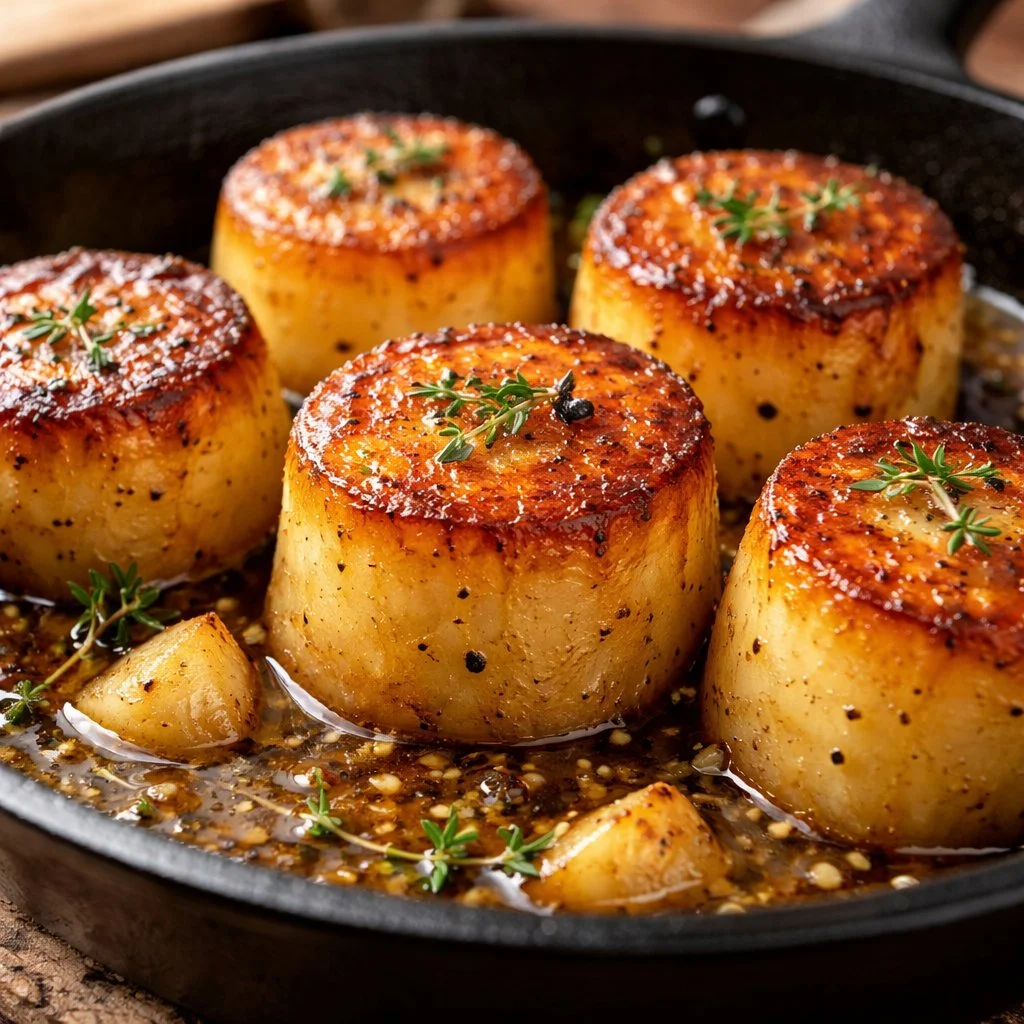
I remember the first time I made fondant potatoes — the smell of butter and thyme, that gleaming, caramelized crust, and a fluffy, almost whipped center. This technique turns ordinary potatoes into a showy side that feels restaurant-level but is surprisingly simple. It’s perfect for holiday plates, date-night mains, or any dinner when you want comfort with a little polish. If you like rich baked casserole sides, this technique sits nicely alongside classics like funeral potatoes in the comfort-food lineup.
Why you’ll love this dish
Fondant potatoes deliver two textures in one: a deeply browned, savory exterior and a tender, pillowy inside. They look elegant on a plate, require minimal special equipment, and use pantry-friendly ingredients. Make them when you want something more impressive than mashed potatoes but without much extra fuss — weeknight roasts, holiday dinners, or as a side to a pan-seared steak.
“The best part was the crust — perfect gold and buttery, while the inside felt like a light, creamy potato cloud. Guests asked for seconds.” — a friend who won’t stop asking for these when we host
They pair especially well with braised meats and gravy. For a hearty family-style dinner, they complement slow-cooked mains such as slow-cooker beef and herbed potatoes.
Step-by-step overview
This method is sear → simmer → glaze. You cut potatoes into thick cylinders, brown the cut faces in butter (with a little neutral oil so it won’t burn), add stock and herbs, cover and cook gently until tender, then remove the lid and reduce the liquid into a glossy glaze that you spoon over the potatoes. Plan about 35–40 minutes from start to finish, most of it hands-off simmering.
What you’ll need
- 4–6 medium potatoes (Yukon Golds are ideal for creaminess; Russets give a fluffier interior)
- 2–3 tablespoons unsalted butter (use unsalted to control seasoning)
- 1 teaspoon neutral oil (canola, grapeseed, or vegetable oil)
- 1 to 1½ cups chicken or vegetable stock (homemade or low-sodium store-bought)
- Salt and freshly ground black pepper, to taste
- Fresh herbs (optional): thyme or rosemary sprigs tuck into the pan well
Notes: Yukon Golds hold shape and give a silky interior; Russets need gentler handling but yield a lighter crumb. If you’re thinking of casseroles or swaps, the ingredient overlap with simpler dishes like this hobo casserole with ground beef & potatoes makes kitchen planning easy.

Step-by-step instructions
- Peel the potatoes and trim both ends so each becomes a neat cylinder about 1½–2 inches high. Pat them very dry — moisture keeps a crust from forming.
- Heat a large, heavy skillet over medium heat. Add the butter and let it melt. Add a teaspoon of neutral oil to raise the smoke point.
- Place the potato cylinders cut-side down in the skillet. Sear until the cut faces are deeply golden, about 3–4 minutes per side. Turn carefully with tongs to preserve the crust.
- Season the browned potatoes generously with salt and freshly ground black pepper.
- Pour in enough stock to come about halfway up the potatoes. Tuck in a few sprigs of thyme or rosemary if using.
- Cover the skillet and lower the heat to a gentle simmer. Cook until potatoes are tender when pierced with a paring knife, about 20–25 minutes.
- Remove the lid, raise the heat to medium-high, and reduce the liquid until it becomes a thick, glossy glaze, about 3–5 minutes. Spoon the glaze over the potatoes as it reduces to coat them in flavor.
- Transfer to a warm plate and serve immediately.
If you prefer a lower-fat finish or different seasoning ideas, techniques from recipes like funeral potatoes can help you adapt flavors or textures.
Best ways to enjoy it
These shine as a side for:
- Roast chicken, pan-seared steak, or braised short ribs.
- A holiday plate alongside green beans almondine and a bright salad.
- A composed vegetarian main when paired with roasted mushrooms and a herb sauce.
Plating tip: nestle two or three fondant potatoes beside the protein and spoon extra glaze and pan juices over the dish. Finish with a few fresh thyme leaves or a light sprinkle of flaky sea salt for contrast.
Storage and reheating tips
Cool leftovers promptly and refrigerate within two hours. Store in an airtight container for up to 3–4 days. To reheat, place in a skillet over medium heat with a splash of stock or butter, cover briefly to warm through, then uncover to re-crisp the exterior. You can also reheat in a 375°F (190°C) oven for 10–12 minutes. For freezing: flash-cool, wrap individually, and freeze up to 1 month; thaw in the refrigerator overnight before reheating. Always reheat to steaming hot throughout before serving for safety.
Pro chef tips
- Dry potatoes thoroughly after peeling — moisture is the enemy of a good sear.
- Use a mix of butter and oil: butter gives flavor, oil raises the smoke point.
- Don’t overfill the pan with stock; it should reach about halfway up the potatoes so you get both steaming tenderness and a reduction to glaze.
- Turn potatoes with tongs or a thin spatula to preserve the golden crust.
- If the glaze is taking too long to form, raise the heat a little but watch closely — sugars can burn quickly.
Creative twists
- Garlic and lemon: Add a smashed garlic clove with the stock and finish with a squeeze of lemon for brightness.
- Parmesan crust: Sprinkle grated Parmesan on the seared faces before adding stock for a nutty, savory finish.
- Vegan: Replace butter with vegan buttery spread and use vegetable stock. Finish with olive oil for gloss.
- Spiced: Add a pinch of smoked paprika or cumin to the butter for a warm, smoky note.

Common questions
Q: How long does this take from start to finish?
A: Plan 35–45 minutes total: 10–15 minutes to peel and brown, then about 20–25 minutes simmering, plus a few minutes to reduce the glaze.
Q: Can I use small new potatoes instead of cylinders?
A: You can, but whole small potatoes will cook faster and brown less predictably. Cutting uniform cylinders ensures even cooking and maximum crust.
Q: What if my stock runs out before the potatoes are tender?
A: Add hot water or more stock in small amounts, then continue to simmer until tender. Keep the liquid near halfway up the potatoes to preserve the final glaze stage.
Q: Can I bake them instead of simmering on the stovetop?
A: Yes — after searing, transfer the skillet (if ovenproof) to a 375°F (190°C) oven, add enough stock, and bake covered until tender, then reduce uncovered. Oven time will be similar (about 20–30 minutes).
Q: Are fondant potatoes gluten-free?
A: Yes, the basic recipe is naturally gluten-free when you use gluten-free stock. Check labels if using store-bought stock.
Conclusion
If you want detailed variations and step photos, the RecipeTin Eats fondant potatoes post has a great visual walkthrough, and Simply Recipes’ melting potatoes explains an alternate approach with extra notes on timing and oven finishing.
Fondant Potatoes
Ingredients
Method
- Peel the potatoes and trim both ends to create neat cylinders, about 1.5-2 inches high. Pat them dry.
- Heat a large, heavy skillet over medium heat. Melt the butter and add neutral oil.
- Place the potato cylinders cut-side down in the skillet and sear until golden brown, about 3-4 minutes per side.
- Season the browned potatoes generously with salt and pepper.
- Pour stock into the skillet until it reaches halfway up the potatoes, adding herbs if desired.
- Cover and lower the heat to a gentle simmer. Cook until the potatoes are tender, about 20-25 minutes.
- Remove the lid, raise the heat to medium-high, and reduce the liquid to a thick, glossy glaze, about 3-5 minutes.
- Spoon the glaze over the potatoes and serve immediately.