Gordon Ramsay Pot Roast Slow Cooker Recipe

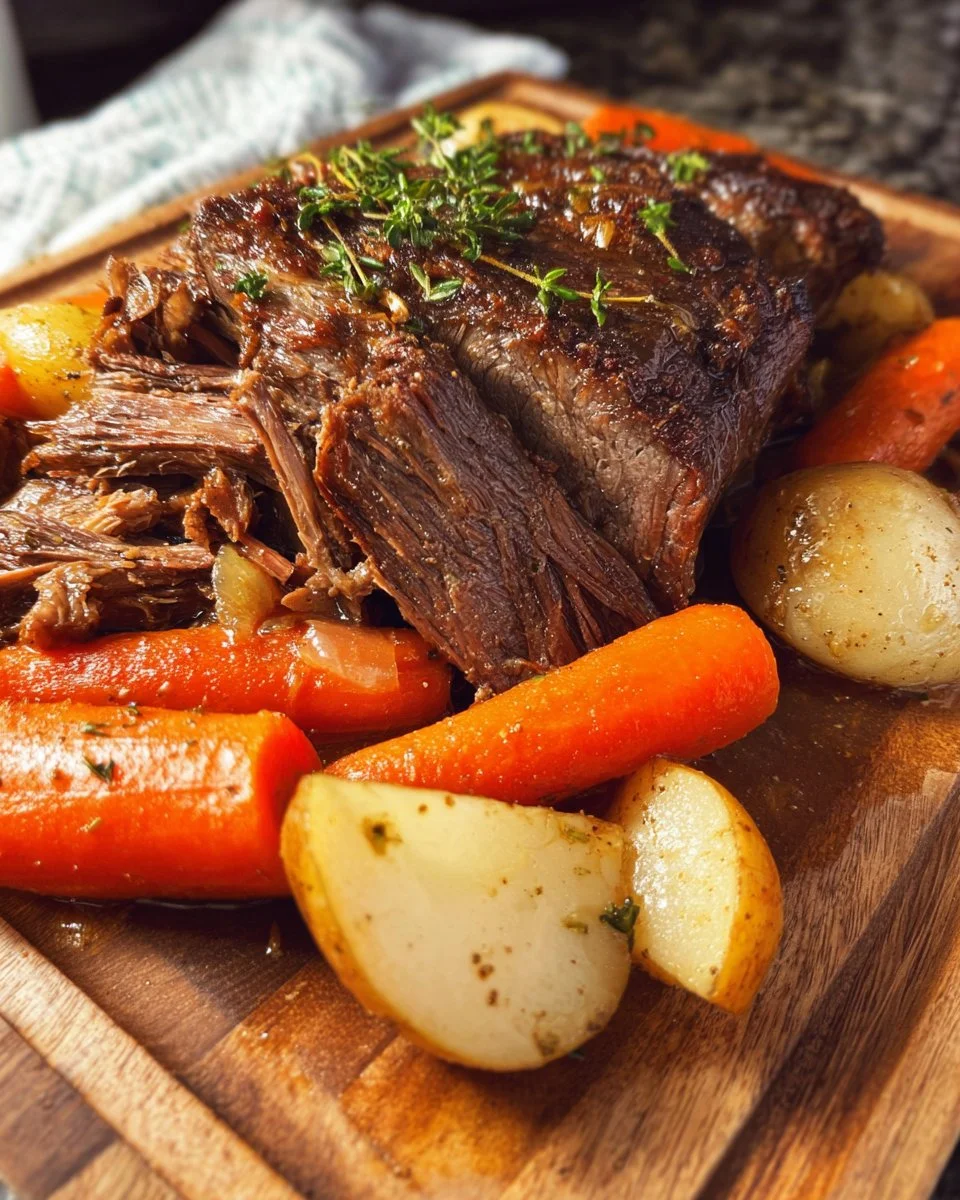
I’ve made this slow-cooker pot roast more times than I can count when I want a simple, comforting dinner that almost cooks itself. This version follows Gordon Ramsay’s straightforward approach: a well-seared chuck roast, a hit of dry onion soup mix for easy flavor, and low-and-slow cooking until the beef melts apart. It’s the kind of meal that fills the house with aroma and comes together with minimal hands-on time.
Why you’ll love this dish
This pot roast is a weeknight hero and a weekend showstopper at the same time. You get deep, beefy flavor from a cheap, well-marbled cut (chuck), concentrated by searing, and then tenderized by slow, moist heat. It’s budget-friendly, family-friendly, and forgiving — perfect if you want dinner ready after errands or for feeding a crowd.
“Hands-off comfort food: browned roast, simple pantry ingredients, and a slow cooker that does the heavy lifting — every forkful tastes like Sunday dinner.”
Reasons to make it now: rainy nights, busy workdays, or when you want leftovers that turn into fantastic sandwiches the next day.
Step-by-step overview
- Season and sear the chuck roast to develop a caramelized crust and deepen flavor.
- Transfer the roast to the slow cooker and sprinkle the dry onion soup mix over it.
- Add a small amount of liquid around the roast to create steam (not to drown the crust).
- Layer chopped carrots, potatoes, onion, and celery on top.
- Cook on LOW for 8–10 hours until the meat is fall-apart tender.
- Shred or slice the roast and spoon the cooking juices over before serving.
This gives you a clear roadmap before you touch a knife or skillet.
What you’ll need
- 4 pounds chuck roast
- Salt and pepper, to taste
- 2 tablespoons olive oil (or neutral oil with a high smoke point)
- 1 packet dry onion soup mix
- 1 cup water (see substitutions below)
- 3 carrots, chopped into large pieces
- 3 potatoes, peeled and cubed
- 1 onion, chopped
- 1 stalk celery, chopped
Substitution notes:
- Swap the 1 cup water for 1 cup beef broth or 3/4 cup beef broth + 1/4 cup red wine for richer flavor.
- If you avoid packaged mixes, replace the dry onion soup mix with 1–2 teaspoons onion powder, 1 teaspoon beef bouillon granules, 1/2 teaspoon garlic powder, and a pinch of dried parsley.
- Use Yukon Gold potatoes or baby potatoes if you prefer less starch breakdown.
Step-by-step instructions
- Pat the chuck roast dry with paper towels. Generously season all sides with salt and pepper.
- Heat 2 tablespoons olive oil in a heavy skillet over high heat until shimmering.
- Sear the roast 4 minutes per side, forming a golden-brown crust. Don’t skip this — it adds deep flavor.
- Place the seared roast in the bottom of your slow cooker.
- Sprinkle the dry onion soup mix evenly over the top of the roast.
- Pour 1 cup water around the edges of the slow cooker — avoid pouring directly over the roast to preserve the crust.
- Layer the chopped carrots, potatoes, onion, and celery over and around the meat.
- Cover and cook on LOW for 8–10 hours. The roast is done when it’s very tender and shreds easily with two forks.
- Remove the meat to a cutting board, shred or slice against the grain, then return to the juices or pour the juices over the plated meat when serving.
Best ways to enjoy it
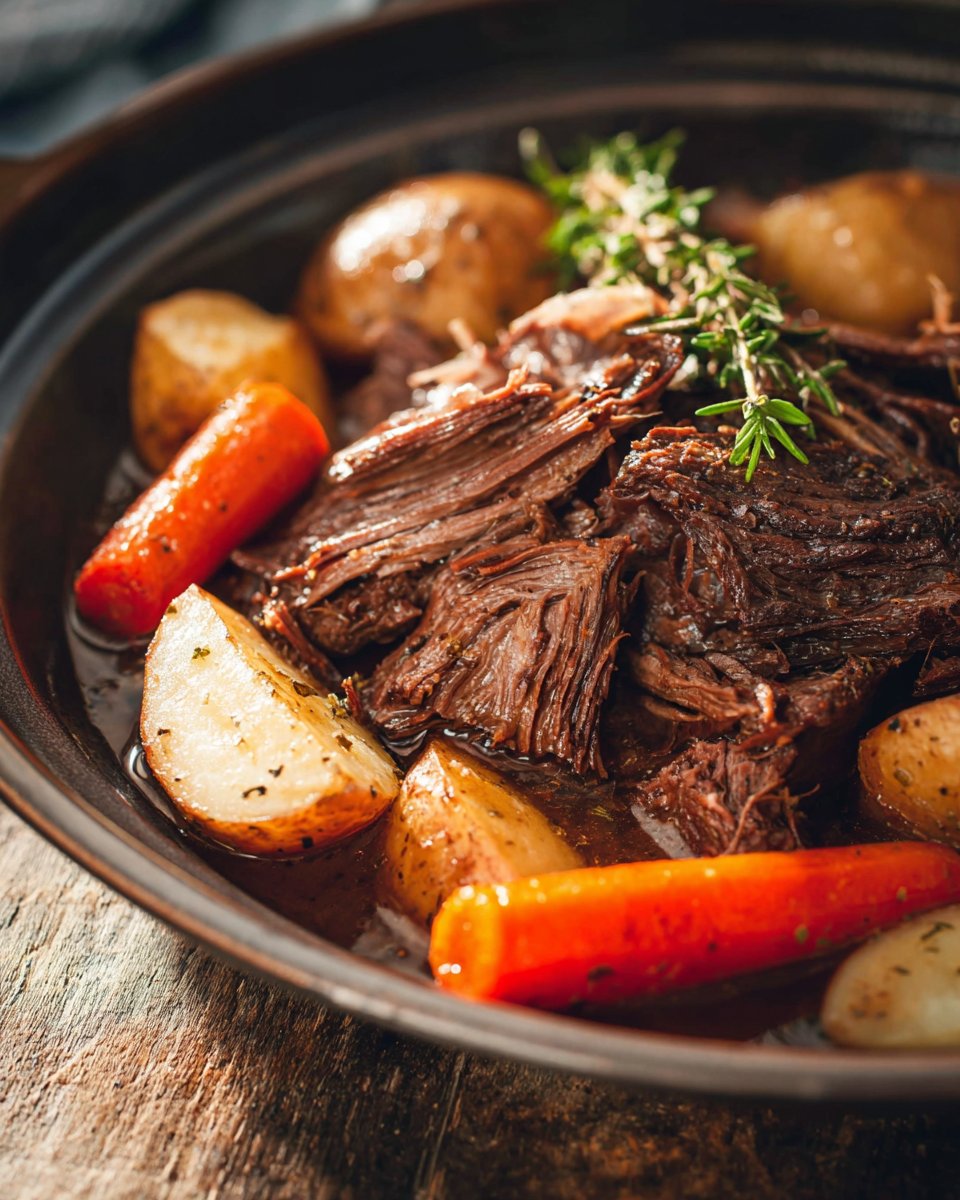
- Serve over creamy mashed potatoes or buttered egg noodles to catch the delicious juices.
- Spoon the cooking liquid over the meat rather than a thick gravy — sometimes less is more.
- Use leftovers in sandwiches with horseradish mayo, or shred into tacos or nachos.
- Pair with a simple green salad or roasted Brussels sprouts for brightness.
- For wine pairing, try a medium-bodied red like Merlot or a Malbec to match the roast’s richness.
Storage and reheating tips
- Refrigerate leftovers within 2 hours of cooking. Store in airtight containers for up to 4 days.
- To freeze: cool completely, place meat and vegetables with some cooking juices in a freezer-safe container or bag, and freeze up to 3 months. Thaw in the fridge overnight before reheating.
- Reheat gently on the stovetop over low heat with a splash of beef broth or water to prevent drying out, or warm in a 325°F (160°C) oven covered with foil until heated through. Avoid high microwave power for long times — it can make meat chewy.
Food safety: the USDA recommends refrigerating perishable food promptly and reheating leftovers to 165°F (74°C).
Pro chef tips
- Searing is flavor insurance: don’t rush it. A good crust forms more than flavor — it signals Maillard reactions that boost the finished dish.
- Pour liquid around the roast, not on top, to keep the crust intact. The slow cooker will still create steam and render connective tissue.
- For super-tender shredding, aim for an internal target in practice: while USDA safe temp for beef is 145°F (63°C), pot roast becomes fall-apart tender when connective tissue breaks down at about 190–205°F (88–96°C) — time matters more than a single temperature reading here.
- Cut vegetables into even pieces so they cook uniformly. If you prefer firmer veg, add potatoes and carrots halfway through cooking.
- If your slow cooker runs hot, start checking at 7 hours. Different models vary by ~20–30°F.
Creative twists
- Balsamic boost: add 1/4 cup balsamic vinegar to the cooking liquid for a touch of acidity and depth.
- Herb-forward: toss in a few sprigs of fresh thyme and rosemary for aromatic lift.
- Mexican-style: swap onion soup mix for taco seasoning and add a chipotle in adobo for heat.
- Low-sodium: use a low-sodium onion soup mix or homemade seasoning and substitute low-sodium beef broth for water.
- Pressure-cooker adaptation: cook on high pressure for 60–75 minutes with natural release for a faster alternative (timing varies by appliance).
Your questions answered
Q: Can I cook this on HIGH instead of LOW?
A: Yes, but results differ. Cooking on HIGH typically takes 4–6 hours and can yield good results, but LOW cooks more evenly and produces more tender meat. Check earlier to avoid overcooking vegetables.
Q: Do I have to sear the roast?
A: Technically no, but searing adds significant flavor and improves the finished texture. If you’re short on time, at least brown two sides in the pan.
Q: How do I thicken the juices into gravy?
A: Remove meat and veggies, skim fat if desired, then mix 1–2 tablespoons cornstarch with cold water to form a slurry and whisk into simmering juices on the stovetop until thickened. Alternatively, make a beurre manié (equal parts softened butter and flour) and whisk that in.
Q: What if I don’t have onion soup mix?
A: Use 1–2 teaspoons onion powder, 1 teaspoon beef bouillon, 1/2 teaspoon garlic powder, and a pinch of dried herbs as a quick substitute.
Q: Can I cook a different cut of beef?
A: Chuck is ideal because of its marbling and collagen. Brisket or chuck shoulder can work too. Lean cuts (like round) can dry out if not cooked properly.
Conclusion
This slow-cooker pot roast combines minimal prep with maximum comfort — sear for flavor, layer the veggies, and let low heat do the rest. For another slow-cooker roast idea that adds balsamic brightness, see this recipe: Balsamic Roast in a Slow Cooker – Foody Schmoody Blog. If you want a deeper dive into pot roast technique and troubleshooting, this guide is a great companion: Easy Slow Cooker Pot Roast Recipe: How to Cook the Best Pot Roast – MasterClass.
Slow-Cooker Pot Roast
Ingredients
Method
- Pat the chuck roast dry with paper towels. Generously season all sides with salt and pepper.
- Heat olive oil in a heavy skillet over high heat until shimmering.
- Sear the roast for 4 minutes on each side to form a golden-brown crust.
- Transfer the seared roast to the bottom of the slow cooker.
- Sprinkle the dry onion soup mix evenly over the top of the roast.
- Pour 1 cup water around the edges of the slow cooker, avoiding the roast.
- Layer the chopped carrots, potatoes, onion, and celery over and around the meat.
- Cover and cook on LOW for 8–10 hours until the meat is very tender and shreds easily with two forks.
- Remove the meat to a cutting board, shred or slice against the grain, then return to the juices or pour the juices over the plated meat.