French Fried Onion Strings

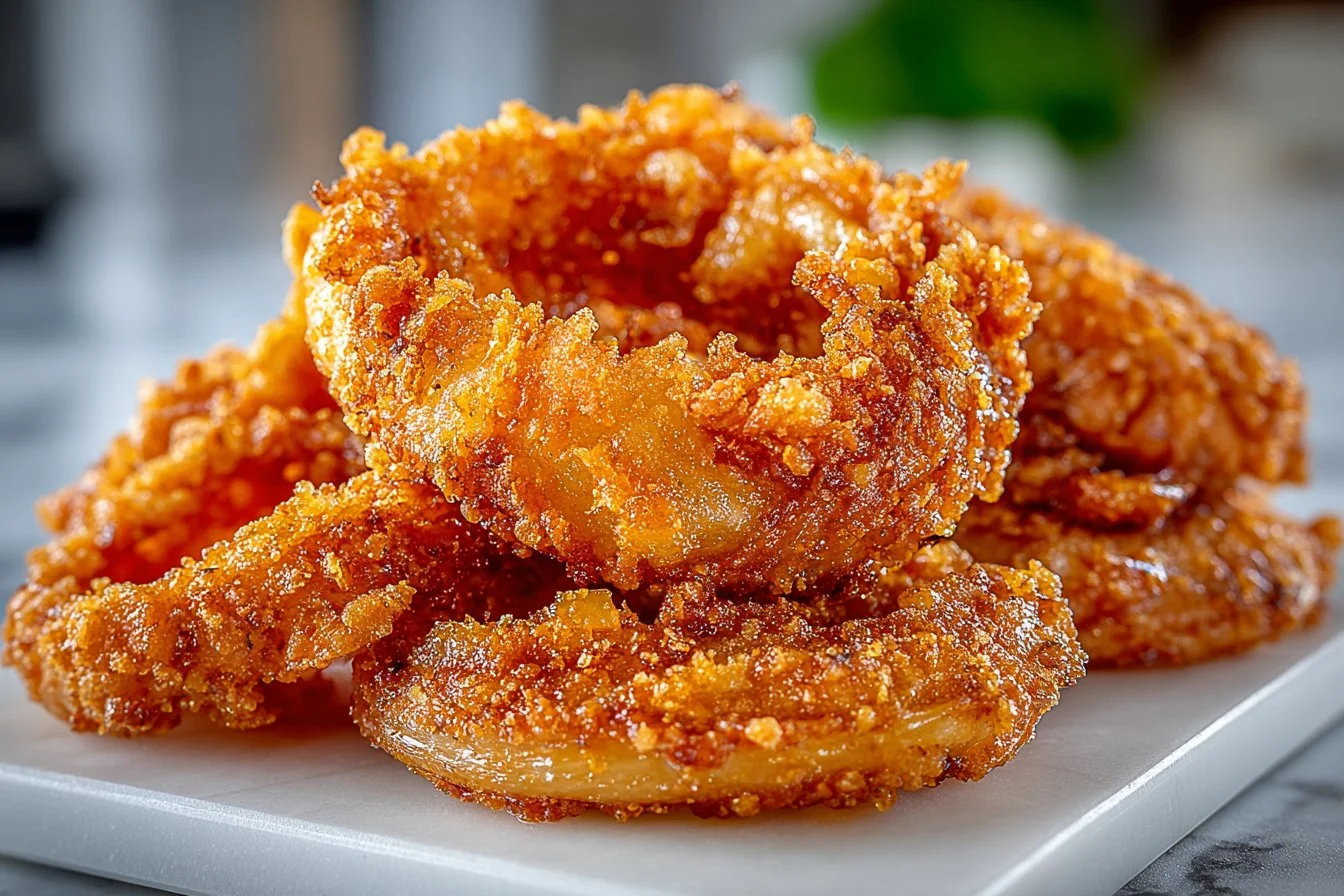
I first made these French fried onion strings as a crunchy topping for burgers and almost immediately started spooning them onto everything — salads, baked potatoes, even a bowl of creamy mac and cheese. They’re thin, golden, and wildly addictive: sweet onion soaked in tangy buttermilk, dredged in seasoned flour, and fried until lacy and crisp. They’re fast enough for weeknights, impressive enough for casual dinner parties, and easy to scale up when company drops by. If you like a crisp, savory garnish that transforms ordinary dishes, this recipe is for you. (If you want a warm topping idea for pot roast or casseroles, check out this crock-pot French onion chicken.)
Why you’ll love this dish
These onion strings are the best kind of small kitchen investment: minimal prep, big payoff. The buttermilk soak softens the onion’s bite and helps the flour seasoning cling, while the thin cut guarantees maximum crunch. They add texture, savory-sweet balance, and visual flair to everything from weeknight burgers to holiday green-bean casseroles.
“A perfect balance of sweet onion and crunchy coating — the topping I never knew my sandwiches needed.”
Reasons to try it:
- Quick to make once the oil is hot (active frying time is minutes).
- Budget-friendly — one sweet onion goes a long way.
- Versatile — use as a topping, side snack, or party nibble.
- Kid-approved crunch that often outperforms store-bought alternatives like French’s on sandwiches and casseroles. You can also pair them with slow-cooked dishes like these crockpot French onion meatballs for extra oomph.
How this recipe comes together
Step-by-step overview:
- Slice the sweet onion very thin and separate into strings.
- Soak the onion slices in buttermilk for at least 30 minutes — this tames sharpness and helps the flour stick.
- Heat two inches of neutral oil to 375°F and prepare seasoned flour.
- Drain onions well, toss in the flour so they’re each coated and not clumped, then fry small handfuls until golden and crisp (3–5 minutes).
- Drain on paper towels and cool briefly — serve immediately or store properly.
This quick overview gets you mentally ready: soak, heat, dredge, fry, drain.
Gather these items
Key ingredients
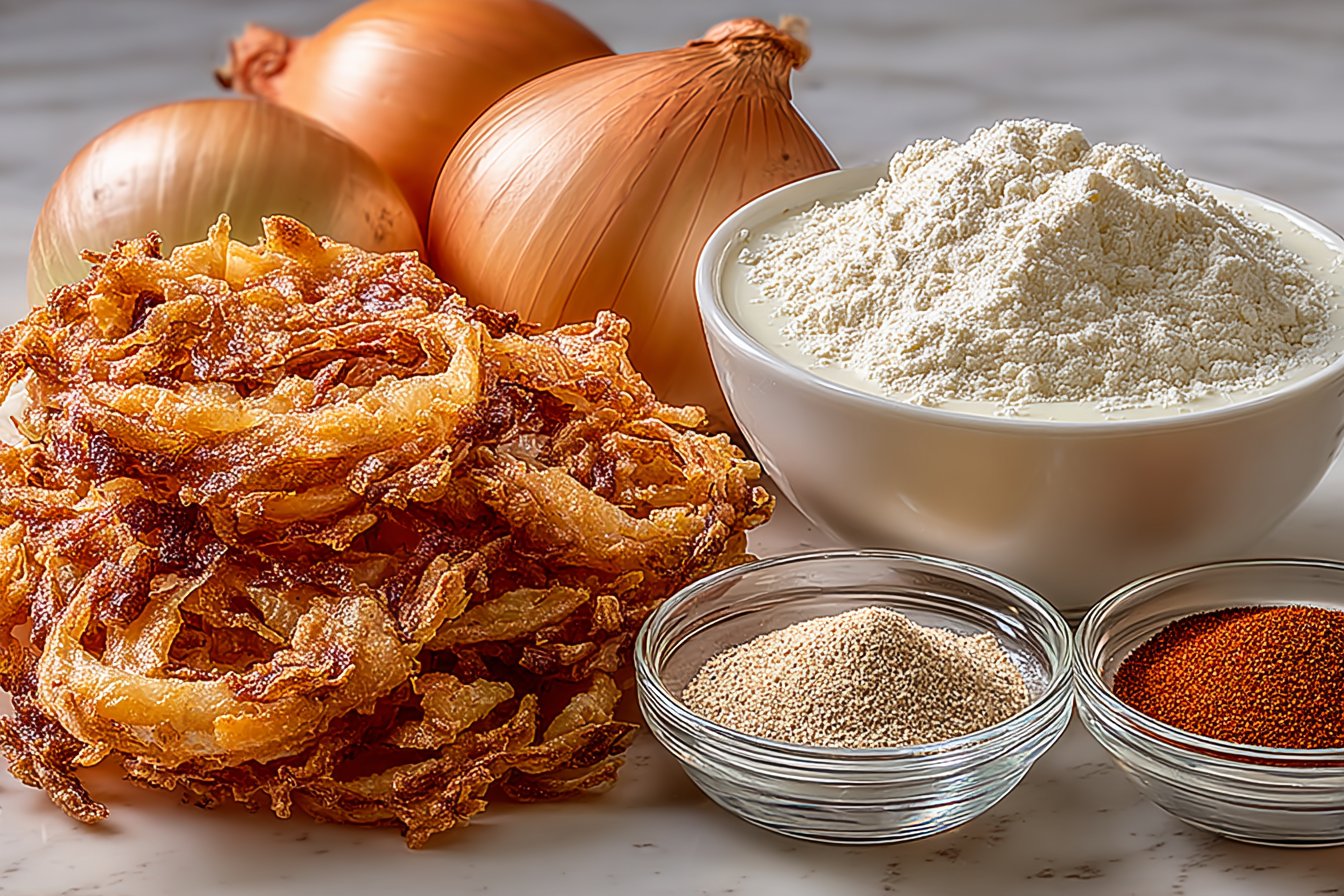
- 1 sweet onion (Vidalia or other sweet varieties work great)
- 2 cups buttermilk (whole or low-fat)
- 2 cups all-purpose flour
- 1 teaspoon salt
- ½ teaspoon black pepper
- 1 teaspoon paprika
- ½ teaspoon cayenne (optional — for a gentle heat)
- ½ teaspoon garlic powder
- Neutral cooking oil (canola, vegetable, or peanut oil), enough to fill pot about 2 inches
Notes and substitutions:
- If you don’t have buttermilk, use 1¾ cups milk + ¼ cup plain yogurt or 1½ tbsp vinegar/lemon juice mixed into milk and rested 5 minutes.
- For a gluten-free version, use a 1:1 gluten-free flour blend and fritter the strings quickly — texture will differ.
- Swap sweet onion for yellow onion if you like a stronger flavor; soak a bit longer to mellow it.
Directions to follow
- Peel the onion and cut it in half through the root so the halves hold together while you slice. Lay each half cut-side down and slice thin half-moon strips. Use your fingers to separate the layers into individual strings.
- Place the onion strings in a bowl and pour over the buttermilk. Stir gently to coat. Let soak at least 30 minutes. This softens the onion and allows the coating to cling.
- Pour oil into a deep pot to a depth of about 2 inches. Fit a deep-fry thermometer and heat to 375°F (190°C). If you don’t have a thermometer, test by dropping a tiny piece of flour; it should sizzle and brown in about 30 seconds.
- While the oil heats, whisk together the flour, salt, black pepper, paprika, cayenne, and garlic powder in a shallow bowl. Set aside.
- Drain the soaked onions in a colander. Stir or shake so excess buttermilk drains away; trapped liquid will cause splatter.
- When the oil is steady at 375°F, take a small handful of drained onions and toss them in the seasoned flour. Stir until each string is coated and separated. Shake off excess flour — too much loose flour will burn in the oil.
- Carefully add the coated onion strings to the hot oil. Fry in batches to avoid overcrowding; overcrowding drops oil temperature and makes soggy results. Cook each batch 3–5 minutes until golden brown and crisp.
- Use a slotted spoon or spider to remove the strings and drain on a plate lined with paper towels. Repeat with remaining onions.
- Cool slightly and serve. Store cooled onion strings in an airtight container at room temperature (see storage tips below).
Safety notes: Never leave hot oil unattended. Keep children and pets away. If oil smokes, lower temperature — smoking oil breaks down and tastes bitter.
Best ways to enjoy it
- Classic burger topper: add a handful to burgers for a restaurant-style crunch.
- Salad garnish: sprinkle over a wedge or green salad for texture contrast. (They play well against creamy dressings.)
- Soup or casserole finish: use them to top French onion soup (for a crunchy twist) or green bean casserole instead of canned fried onions.
- Appetizer: serve with aioli, chipotle mayo, or blue cheese dip for dipping.
- Loaded baked potatoes: spoon over sour cream and chives for a crunchy finish.
If you want warm accompaniments, these onion strings contrast beautifully with slow-simmered mains — try them on top of rich, saucy dishes or next to a creamy gratin for balance. For inspiration, pair them with dishes like a classic French onion soup.
Storage and reheating tips
Short-term storage:
- Cool completely to room temperature before storing. Pack in an airtight container with a paper towel to absorb residual oil. In many kitchens you can keep them at room temperature up to 5 days, but texture will gradually soften.
- If your kitchen is warm (above 75–80°F), refrigerate and plan to re-crisp before serving.
Reheating to restore crunch:
- Oven/toaster oven: preheat to 350°F (175°C). Spread in a single layer on a baking sheet and reheat 4–6 minutes until crisp.
- Air fryer: 2–3 minutes at 350°F works well.
- Avoid microwaving — it will make them soggy.
Freezing:
- Not recommended for best texture. Fried strings can be frozen, but thawing usually yields limp results. If you must freeze, flash-freeze single layers on a sheet, then store in a freezer bag; reheat from frozen in a hot oven.
Food safety: don’t leave fried foods at room temperature more than 2 hours if ambient temperatures are high (over 90°F), and always cool before sealing to limit condensation.
Pro chef tips
- Slice thin and even: the thinner the slice, the crispier the strings. A mandoline works if you’re comfortable with one.
- Dry thoroughly after draining: trapped buttermilk creates steam and oil splatter. Tap the colander gently and stir to let extra liquid drip out.
- Keep batches small: frying in small amounts keeps oil temperature steady and prevents clumping.
- Flour, then shake: too much loose flour burns; shaking off excess keeps the oil clean and your coating light.
- Maintain oil temp: use a thermometer and wait for the oil to stop climbing before adding onions. If the oil dips, let it return to 375°F before the next batch.
- Season right away: sprinkle a little extra salt as soon as the strings come out of the oil so it sticks.
Creative twists
- Beer-batter dip: for thicker, puffier strings, use a light beer batter instead of dry flour.
- Parmesan dusting: toss hot onion strings with finely grated Parmesan for a salty finish.
- Spicy-Sweet: add 1 tsp brown sugar to the flour mix and increase cayenne for a barbecue-style bite.
- Panko crunch: substitute half the flour with fine panko for an extra-crispy texture.
- Herb-forward: add 1 tsp dried thyme or smoked paprika for a Mediterranean twist.
- Vegan option: use non-dairy milk mixed with a tablespoon of vinegar for the soak, and follow the same coating process.
Your questions answered
Q: Can I make these ahead?
A: You can fry them ahead and store at room temperature in an airtight container for a day or two. For longer storage, refrigerate and re-crisp in the oven before serving.
Q: Is buttermilk necessary?
A: Buttermilk helps tenderize the onion and makes the coating stick. You can substitute milk + acid (1½ tbsp lemon juice or vinegar per cup) or plain yogurt thinned with milk.
Q: How do I stop the strings from sticking together?
A: Separate layers well when slicing, drain thoroughly after soaking, and toss in flour in small batches so each string gets coated. Shake off excess before frying.
Q: Can I use other onions?
A: Yes. Sweet onions are milder and caramelize slightly at the edges; yellow onions give more bite; red onions add color and a sharper flavor.
Q: Can I reuse the frying oil?
A: You can if it’s still clean and hasn’t smoked. Strain through a fine mesh and store in a sealed container for future frying. Discard if it smells rancid or is dark.
Conclusion
For a quick, crunchy upgrade to burgers, salads, and casseroles, these French fried onion strings deliver bold texture and flavor with minimal fuss. If you like the convenience of store-bought toppings, consider comparing textures with a classic option like French’s® Original Crispy Fried Onions | McCormick — or dive into another homemade take for inspiration at Homemade Fried Onion Strings – Jess Pryles.

French Fried Onion Strings
Ingredients
Method
- Peel the onion and cut it in half through the root. Lay each half cut-side down and slice thin half-moon strips. Use your fingers to separate the layers into individual strings.
- Soak the onion slices in buttermilk for at least 30 minutes to soften the sharpness and help the flour stick.
- Pour oil into a deep pot to a depth of about 2 inches and heat to 375°F (190°C).
- While the oil heats, whisk together flour, salt, black pepper, paprika, cayenne, and garlic powder in a shallow bowl.
- Drain the soaked onions and shake off excess buttermilk.
- Add a small handful of onions to the seasoned flour, ensuring they are well coated and separated. Shake off excess flour.
- Carefully add the coated onion strings to the hot oil in batches, frying for 3–5 minutes until golden brown and crisp.
- Remove the strings with a slotted spoon and drain on paper towels. Repeat with remaining onions.
- Cool slightly and serve immediately or store in an airtight container at room temperature.